Fall Asleep. Stay Asleep.
Create a bedtime routine that actually works. Use guided wind-downs, calming soundscapes, and short breathing practices to fall asleep faster and return to sleep more easily.

Sleep is not a switch you flip; it is a biological process. Begin focuses on the pieces you can influence tonight: reducing hyper-arousal, lowering mental load, and shaping an environment that signals safety and rest.
Cognitive Unloading.Stop the 'tired but wired' loop. Our guided wind-downs use cognitive shuffling techniques to occupy your brain with safe, non-stimulating imagery, breaking the cycle of rumination.
Nervous System RegulationYou can't sleep if your body is in 'fight or flight.' Use body scans to physically lower your heart rate and signal to your vagus nerve that it is safe to power down.
Brainwave EntrainmentAccess deeper sleep stages faster. We use binaural beats and delta waves to slow your brain's frequency down to the 0.5–4Hz range, the state where physical restoration happens.

The Science of Good Sleep
Create a Buffer
Going from 'busy' to 'asleep' isn't a switch; it's a process. Use our wind-down tracks to create a gentle transition zone, signaling to your body that the day is officially done.
Physically Unwind
Your body needs to physically power down to sleep. Use body scans to release muscle tension and lower your heart rate, helping you settle into a restorative state.
Ditch the Blue Light
Screens trick your brain into thinking it's daytime. Our audio-only approach lets you lock your phone, keep the room dark, and let your melatonin flow naturally.
Clear Your Head
Racing thoughts are the enemy of sleep. Use guided imagery to mentally 'file away' your worries and to-do lists, clearing the mental space you need to drift off.
Block Disruptions
Sudden noises wake you up because of the change in volume. Continuous soundscapes create a smooth audio blanket, masking spikes like traffic or snoring so you stay asleep.
Build a Routine
The brain loves patterns. By listening to the same sleep song or rain track every night, you create a powerful cue that triggers sleep automatically.
Your Sleep Toolkit
Psychoacoustic Landscapes
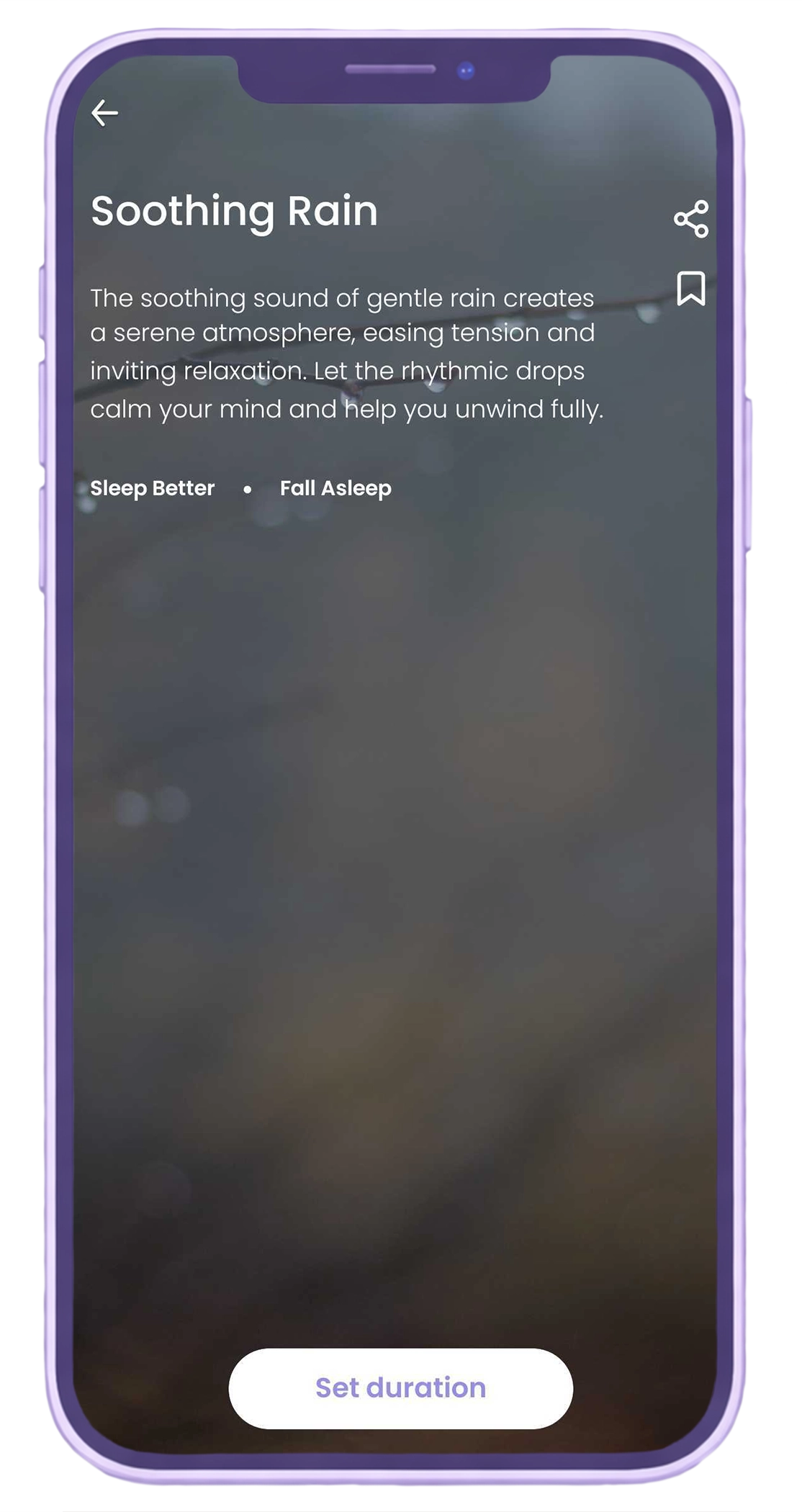
Turn your bedroom into a sanctuary. Choose from 3D nature recordings (rain, forest, ocean, among others) processed to be immersive and non-distracting.
Binaural & Delta Frequencies
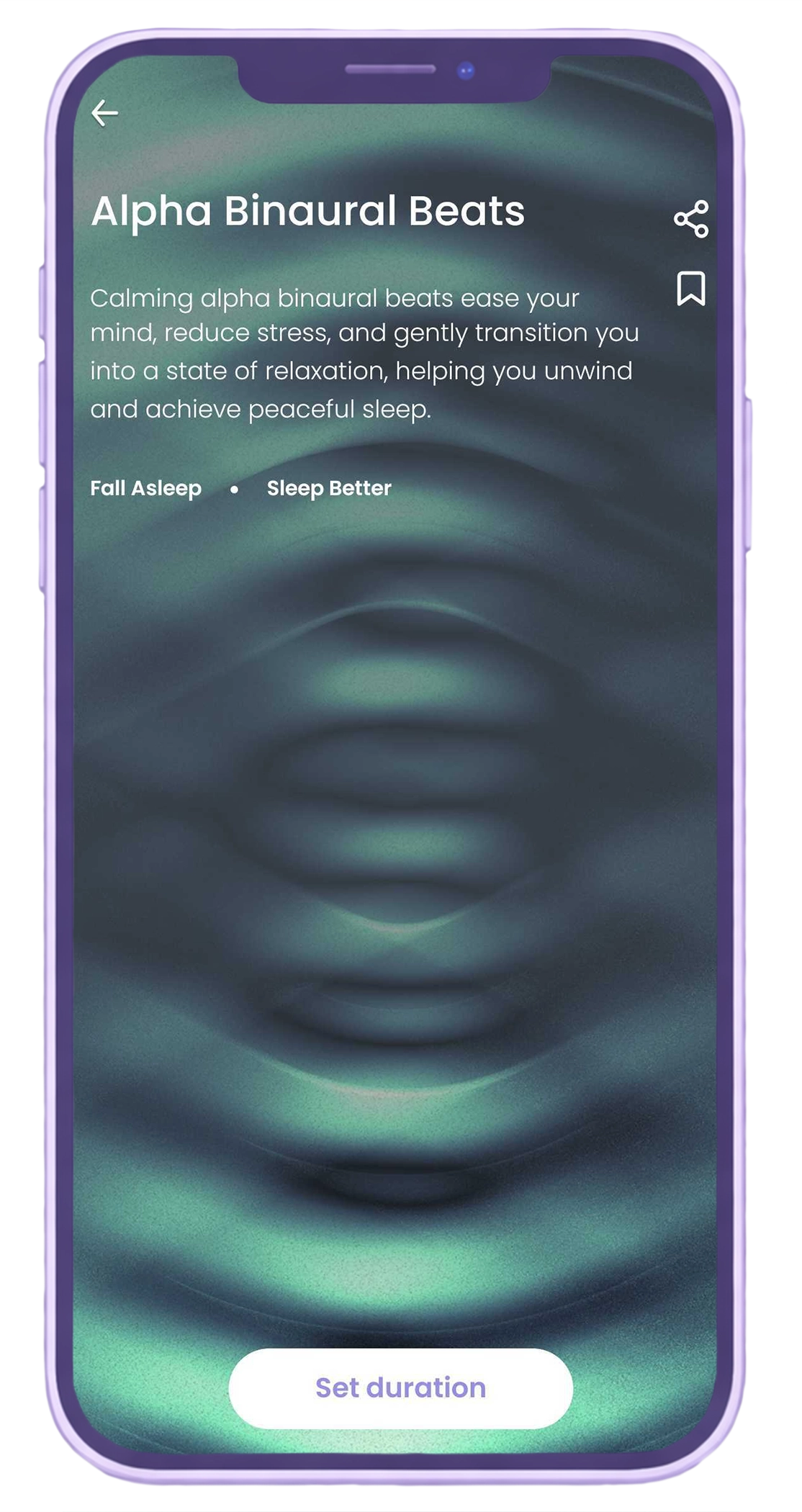
Science you can hear. Layer delta waves under your music to physically encourage your brain to enter slow-wave sleep (deep sleep).
Smart Fade-Out
Our 'Sleep Timer' doesn't just cut off. It uses a decibel-curve fade to gently lower the volume as you drift off, preventing the silence from startling you awake.
100% Offline
Protect your sleep environment. Download your toolkit to your device so you can keep your phone in airplane mode, blocking notifications and EMFs while you rest.
Tonight's routine
A practical sleep routine you can repeat
Better sleep usually comes from consistent cues, not one perfect night. Use this simple sequence for one week before judging whether it works for you.
Dim and disconnect
Reduce bright screens 30 to 60 minutes before bed when possible. If you need your phone for audio, start the session, lock the screen, and keep the room dark.
Downshift the body
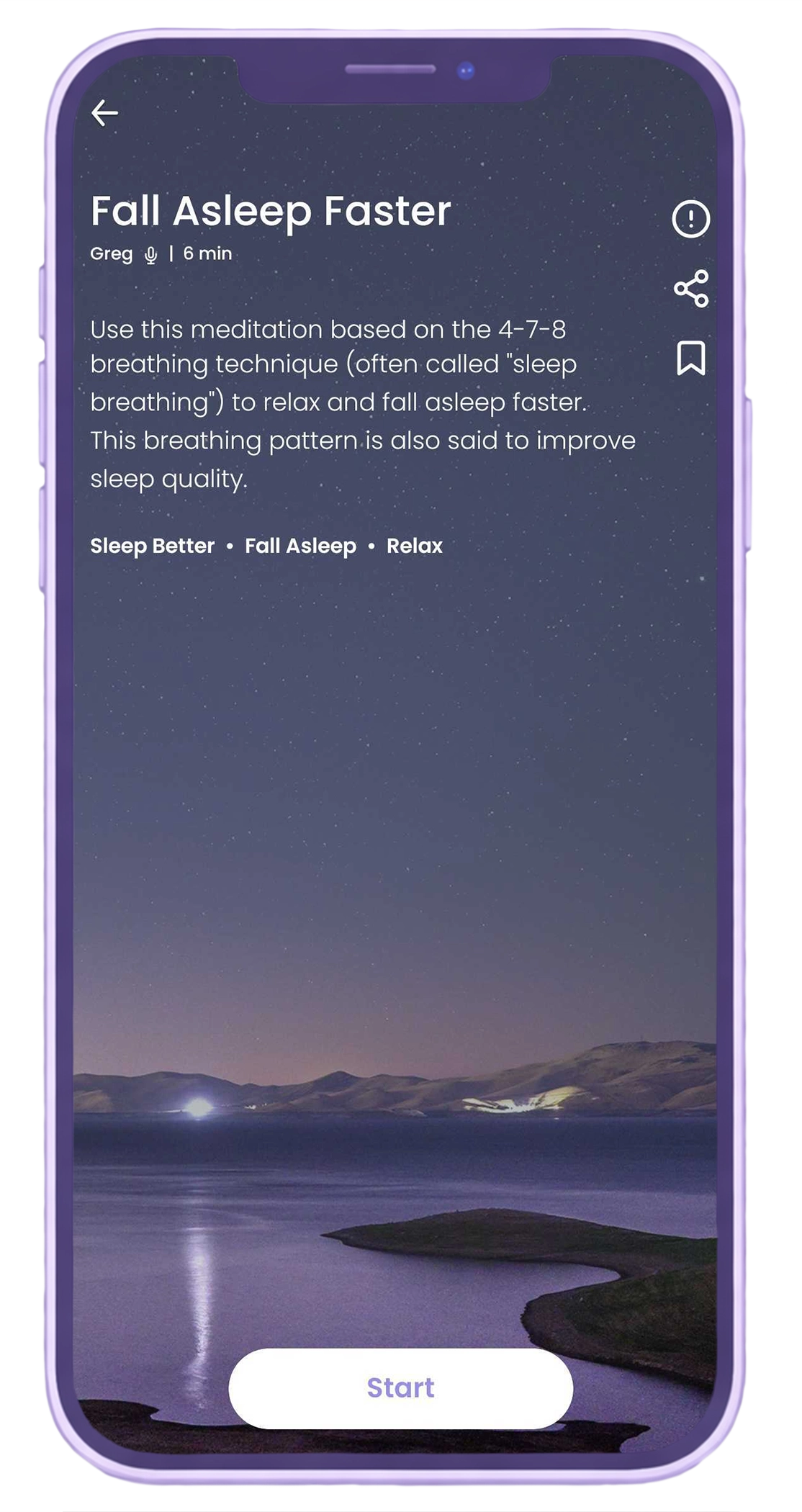
Use a body scan, slow breathing, or progressive muscle release for five to ten minutes. The aim is to lower arousal, not to force sleep on command.
Keep the cue consistent
Repeat the same soundscape, story, or breathing track for several nights. Familiar cues help your brain associate the routine with sleep.