How Meditation and Breathing Exercises Can Help You Perform Better in the CrossFit Open
Written by the Begin Editorial Team and edited by a group of parents, teachers, pet lovers, sports enthusiasts, and foodies who practice mindfulness in everyday life. We focus on evidence-informed tools that fit real routines at home, at work, and in training.
In this article:
The barbell is loaded. The clock is about to start. Your heart is already pounding. In that moment, your body is ready — but is your mind?
Every year, the CrossFit Open pushes hundreds of thousands of athletes to their limits. The workouts are designed to test not just physical capacity, but mental resilience. And yet, most athletes spend months perfecting their clean technique or building their engine, while completely ignoring the most powerful performance tool they already have: their breath.
Meditation and breathing exercises are no longer fringe wellness trends. They are battle-tested tools used by some of the fittest athletes on the planet. Brian MacKenzie — a human performance specialist whose breathwork protocols have been used by CrossFit Games champions Tia-Clair Toomey and Rich Froning Jr. — has built an entire practice around the idea that how you breathe determines how you perform. Toomey herself has spoken about using breathing and meditation before competing to calm herself and sharpen her focus throughout workouts.
The science backs them up. The American College of Sports Medicine has found that athletes who learn to regulate their breathing experience fewer injuries and maintain greater confidence under competitive pressure. Proper breathing activates the parasympathetic nervous system, promoting better stress management and faster recovery — exactly what you need when a 12-minute time cap is staring you down.
This article breaks down the three workouts of the 2026 CrossFit Open and explains, WOD by WOD, how specific meditation and breathing strategies can help you squeeze out extra reps, stay composed under fatigue, and perform at your absolute best.
26.1 — The Wall Ball and Box Jump Grind
The workout
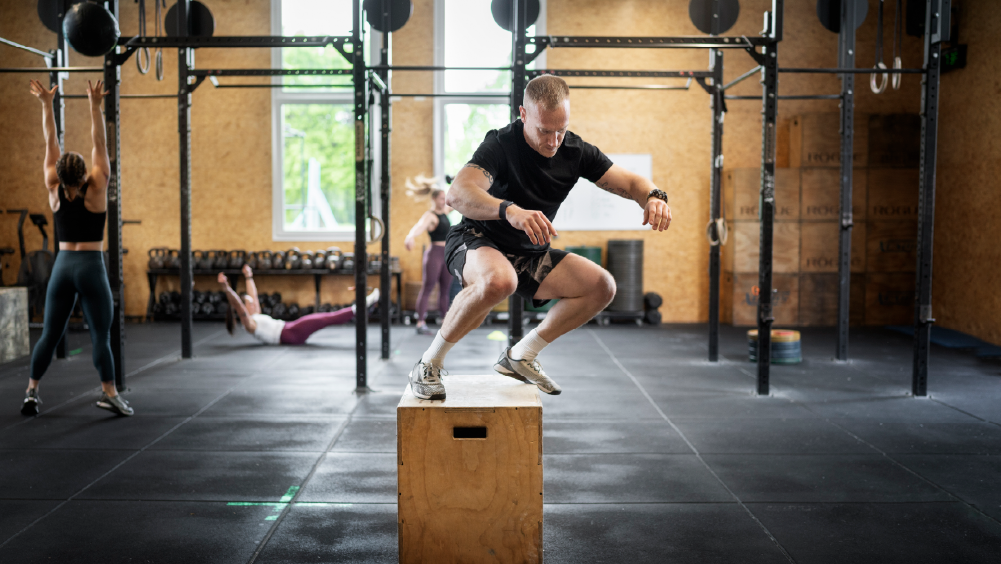
26.1 was a For Time effort with a 12-minute cap, built around a punishing pyramid of wall-ball shots (20-30-40-66-40-30-20) alternated with sets of 18 box jump-overs and medicine-ball box step-overs. The total: 354 reps. Fewer than 1% of athletes finished the Rx'd version.
Why your mind breaks before your body does
This workout is a classic capacity test disguised as simple movements. Wall balls and box jumps are not technically complex, but at this volume and pace, the real enemy is mental fatigue. Somewhere around rep 80 of 66 unbroken wall balls, your quads are screaming and your brain is begging you to put the ball down. That decision — to break or to hold on — is where meditation and breathing training pays off.
Breathing Strategies for High-Rep Wall Balls and Box Jumps
Rhythmic breathing to sustain output. The wall-ball shot has a natural two-phase rhythm: squat down (inhale), drive up and throw (exhale). Athletes who have trained diaphragmatic breathing can lock into this rhythm and maintain it for far longer than those who breathe chaotically. The Systema breathing technique — which focuses on matching your breathing frequency to the demands of the movement — is particularly effective here. Instead of gasping for air and breaking the set, you turn each rep into a controlled breathing cycle.
Box breathing during transitions. The 18-rep sets of box jump-overs are your only opportunity to recover between walls of wall balls. Athletes trained in box breathing (4 seconds in, 4-second hold, 4 seconds out, 4-second hold) can use a shortened version of this protocol during step-overs to rapidly downregulate their heart rate and prepare their system for the next onslaught. Even two or three controlled breaths during a transition can make the difference between finishing the next set unbroken or crumbling into sets of five.
Meditation for pain tolerance. Mindfulness meditation trains you to observe discomfort without reacting to it. When your lungs are burning at the peak of the pyramid, a meditator's brain doesn't interpret the pain as a signal to stop — it recognizes it as a sensation to be acknowledged and moved through. Studies in sports psychology consistently show that mindfulness practitioners report higher pain tolerance and better emotional regulation under physical stress.
26.2 — The Gymnastic Gauntlet
The workout
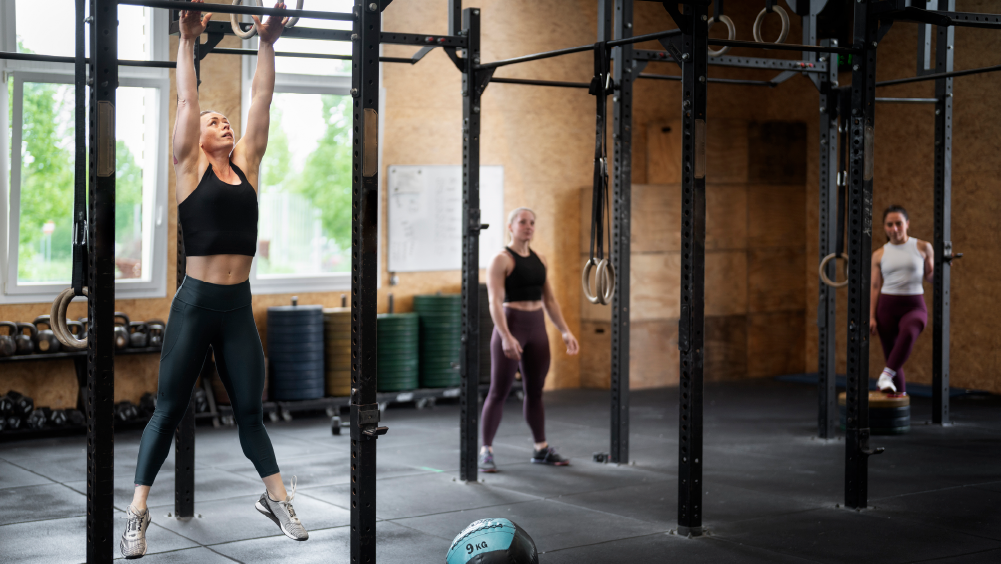
26.2 was a 15-minute time-capped workout that cycled through alternating dumbbell snatches, dumbbell overhead walking lunges (80 ft sections), and progressively harder pulling movements: pull-ups, chest-to-bar pull-ups, and ring muscle-ups. Only 4% of women and 13% of men finished Rx'd.
Why your mind breaks before your body does
This workout is a skill-under-fatigue test. The dumbbell work is metabolically demanding and accumulates shoulder fatigue — precisely the muscles you need for the pulling movements. By the time you reach the ring muscle-ups, your grip is shaky, your shoulders are fried, and your nervous system is overloaded. This is where athletes make costly mistakes: failed reps, no-reps, panicked attempts that waste energy.
Breathwork for Gymnastics Under Fatigue
Pre-workout visualization and breath control. Ring muscle-ups under fatigue are as much a mental challenge as a physical one. Athletes who practice meditation-based visualization — closing their eyes, slowing their breathing, and mentally rehearsing each phase of the kip and transition — arrive at the rings with a calm nervous system and a clear motor pattern. This isn't abstract — motor imagery has been shown to activate the same neural pathways as actual movement, effectively giving you extra practice reps without the physical cost.
Nasal breathing during dumbbell work. The dumbbell snatches and lunges, while demanding, operate at a moderate enough intensity that nasal breathing is possible for well-trained athletes. Nasal breathing forces a slower, more controlled respiratory rate that keeps heart rate lower and delays the onset of that "red zone" feeling. Athletes who switch to mouth breathing too early in this workout often arrive at the pull-up bar already gasping, which makes kipping rhythm nearly impossible to maintain.
The "reset breath" between movements. Meditation teaches you to create micro-moments of stillness amid chaos. In 26.2, the transitions between the lunge lane, the dumbbell station, and the pull-up bar are your reset opportunities. A single deep diaphragmatic breath — five seconds in through the nose, five seconds out through the mouth — before gripping the pull-up bar can be the difference between a smooth set and a failed rep. It activates the vagus nerve, momentarily calms the fight-or-flight response, and allows you to approach the next movement with intention rather than panic.
Grip anxiety management. Many athletes develop a psychological block around muscle-ups in competition. The fear of failing a rep creates tension in the forearms and shoulders, which ironically makes failure more likely. Regular meditation practice builds the skill of non-reactive awareness — you can notice the fear without letting it hijack your movement pattern. Tia-Clair Toomey has described using exactly this kind of pre-movement calming technique before tackling high-skill gymnastics in competition.
26.3 — The Heavy Barbell Sprint
The workout
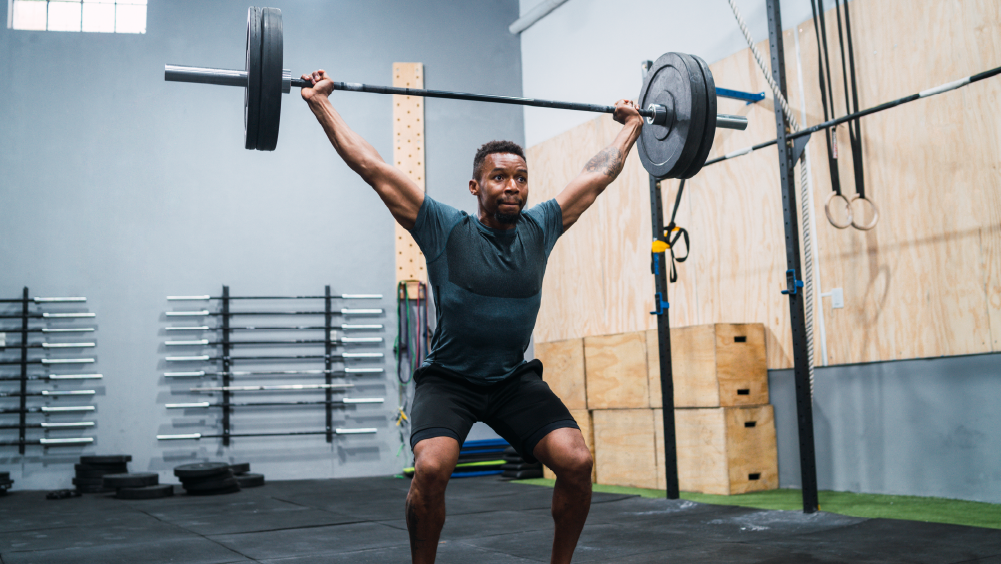
26.3 was a For Time workout with a 16-minute cap: six rounds (in pairs of two) of 12 burpees over the bar, 12 cleans, 12 burpees over the bar, and 12 thrusters — with the barbell weight increasing every two rounds (Women: 65/75/85 lb; Men: 95/115/135 lb). Athletes had to change their own weights with no outside assistance.
Why your mind breaks before your body does
This workout combines two of the most neurologically taxing elements in CrossFit: burpees (which repeatedly shift your body between the ground and standing) and heavy barbell cycling (which demands explosive hip drive and precise timing). The escalating weight means that the workout gets harder at exactly the point where you're most fatigued. The final two rounds at the heaviest weight are a pure test of will — your muscles have the capacity to move the bar, but your brain has to override every signal telling you to slow down.
How to Breathe Through Heavy Barbell Cycling and Burpees
Tactical breathing for burpee efficiency. Burpees are notorious heart-rate spikers. Most athletes hold their breath on the way down and gasp on the way up, creating an oxygen debt that compounds across 72 total burpees. The tactical breathing method (originally developed for Navy SEALs) teaches athletes to exhale on the descent and inhale on the rise, turning each burpee into a controlled respiratory cycle rather than an energy-draining scramble. Athletes who master this technique report significantly lower perceived effort during high-rep burpee sets.
The Wim Hof method for cold-start barbell sets. Each set of cleans and thrusters begins from a dead stop — the barbell is on the ground, and you have to generate force from zero. The Wim Hof breathing method, which involves controlled hyperventilation followed by breath retention, has been shown to increase adrenaline and tolerance to physical stress. While the full protocol isn't practical mid-workout, a shortened version (three deep, powerful breaths before approaching the barbell) can prime your nervous system for explosive output. Think of it as a biological "ignition switch" before each heavy set.
Meditation during weight changes. Here's the hidden advantage in 26.3: you have to change your own plates twice during the workout. Most athletes treat this as dead time, fumbling with collars while their heart rate stays elevated. Experienced meditators treat it as a recovery window. Thirty seconds of deliberate, slow breathing while loading plates can bring your heart rate down 10–15 BPM — a significant recovery that translates directly into better performance on the next round at a heavier weight.
Acceptance-based focus for the final rounds. The last two rounds at the heaviest weight are where the workout is truly won or lost. This is where meditation's deepest benefit emerges: acceptance. Mindfulness trains you to stop fighting reality and work with what you have. Instead of thinking "this is too heavy" or "I can't do this," a trained mind shifts to "this is heavy, and I am doing it." That subtle cognitive reframe — from resistance to acceptance — reduces the cortisol spike that accompanies perceived threat and allows your body to access energy reserves that a panicked mind locks away.
Building Your Practice: Where to Start
You don't need to become a monk to benefit from these techniques. Here's a practical starting point for CrossFit athletes who want to integrate breathwork and meditation into their training.
Daily (5–10 minutes).
Start with box breathing. Sit comfortably, breathe in for four counts, hold for four, breathe out for four, hold for four. Do this for five minutes each morning. Within two weeks, you'll notice improved ability to control your breathing under stress. Apps like Begin Mindfulness make this effortless — they offer guided breathing and meditation sessions specifically designed for people with active lifestyles, so you can build a consistent practice without spending hours on a cushion.
Before training (2–3 minutes).
Practice a brief visualization of the workout ahead. Close your eyes, slow your breathing, and mentally walk through each movement. See yourself completing the reps with good form and controlled breathing. This primes both your nervous system and your motor patterns. A short guided session on Begin can help you structure this pre-workout ritual until it becomes second nature.
During training.
Experiment with nasal breathing during warm-ups and lower-intensity portions of workouts. Practice matching your breath to movement patterns (exhale on exertion, inhale on recovery). Pay attention to where you hold your breath unnecessarily.
After training (5 minutes).
This is where a guided meditation app really shines. A five-minute cool-down meditation on Begin — focused on slow, deep breathing and body scan awareness — accelerates your transition from sympathetic (fight-or-flight) to parasympathetic (rest-and-recover) mode, improving recovery between sessions and preparing your body for tomorrow's training.
The Bottom Line
The 2026 CrossFit Open reminded us — again — that the fittest athletes aren't just the strongest or the most skilled. They're the ones who can stay composed when everything hurts, make good decisions under fatigue, and trust their bodies when their minds are screaming to stop.
Meditation and breathing exercises build exactly those capacities. They're free, they require no equipment, and they take less time than your daily warm-up. If champions like Tia-Clair Toomey and Rich Froning invest in breathwork as part of their competitive arsenal — working with specialists like Brian MacKenzie — maybe it's time you did too.
Your next Open score might not come from a heavier clean or a faster muscle-up. It might come from your next breath.
Frequently Asked Questions
Does meditation actually improve CrossFit performance?
Yes. Meditation builds the mental skills that directly translate to better WOD performance: the ability to tolerate discomfort, stay focused under fatigue, and make calm decisions when your body is screaming to stop. The American College of Sports Medicine has found that athletes who practice breathing regulation experience fewer injuries and maintain greater confidence in competition. Champions like Tia-Clair Toomey and Rich Froning Jr. work with breathwork specialists as part of their competitive preparation.
What is the best breathing technique for CrossFit WODs?
There is no single best technique — the right approach depends on the workout demands. For high-rep, steady-state movements like wall balls, rhythmic diaphragmatic breathing (inhale on the eccentric, exhale on the concentric) keeps you efficient. For transitions and rest periods, box breathing (4 seconds in, 4-second hold, 4 seconds out, 4-second hold) helps rapidly lower your heart rate. For explosive efforts like heavy cleans, a few deep power breaths before approaching the bar can prime your nervous system for output.
How do elite CrossFit athletes use breathwork?
Many top athletes incorporate breathwork into both their daily routines and competition prep. Brian MacKenzie — a human performance specialist who has worked with Tia-Clair Toomey and Rich Froning Jr. — designs custom breathing protocols that improve stress adaptation and recovery. Athletes typically use visualization combined with controlled breathing before events, nasal breathing during lower-intensity training, and tactical breathing patterns during high-intensity workouts to manage heart rate and delay fatigue.
How long should I meditate before a CrossFit workout?
Two to three minutes is enough to make a meaningful difference. A short pre-workout meditation focused on slow breathing and movement visualization primes your nervous system and sharpens your focus. You don't need a long session — the goal is to arrive at the workout calm, focused, and breathing efficiently rather than amped up and breathing chaotically. Over time, even five minutes of daily meditation practice will make these pre-workout rituals feel automatic.
Can breathwork help me get my first ring muscle-up?
Breathwork won't build the strength or technique you need, but it can remove the mental barriers that prevent you from using the strength you already have. Many athletes who can do muscle-ups in training fail them in competition because anxiety creates tension in the forearms and shoulders. Meditation builds non-reactive awareness — the ability to notice fear without letting it hijack your movement. A single deep reset breath before grabbing the rings can calm your nervous system enough to execute a skill your body already knows how to do.
What is box breathing and how does it help during CrossFit?
Box breathing is a technique where you breathe in for four seconds, hold for four seconds, breathe out for four seconds, and hold again for four seconds. It was developed for use in high-stress military environments and works by activating the parasympathetic nervous system, which lowers heart rate and reduces the stress response. In CrossFit, it's most useful during transitions between movements or during brief rest periods — even two or three controlled cycles can bring your heart rate down enough to tackle the next set with better composure and efficiency.
