Micro-mindfulness and Breathwork: 2–5 Minute Resets for Immediate Anxiety Relief
Written by the Begin Editorial Team and edited by a group of parents, teachers, pet lovers, sports enthusiasts, and foodies who practice mindfulness in everyday life. We focus on evidence-informed tools that fit real routines at home, at work, and in training.
In this article:
When anxiety spikes, long meditation sessions can feel out of reach. Micro-mindfulness and short breathwork practices give a compact toolkit you can use in 2–5 minutes to downshift the body and clear the mind.
This guide gives simple, step-by-step techniques you can try immediately, plus quick safety notes and how to make these mini-practices stick in daily life.
Why short breathwork and micro-mindfulness can help
Physiology in a few breaths
Short-paced breath techniques change the pattern of breathing and can influence the nervous system within minutes. Controlled exhalations, for example, are linked to shifts toward parasympathetic activity, which tends to feel calming and grounding[1].
A growing body of accessible reviews suggests simple breathing practices and brief mindful attention can reduce physiological arousal and subjective stress in the short term, even when done for a few minutes[2][3].
Five quick 2–5 minute practices (step-by-step)
1. Cyclic sighing — fast reset (1–2 minutes)
How: Take two quick inhales through the nose (one after the other), then a long, slow exhale through the mouth. Repeat steadily for 1–2 minutes. Why: This pattern has been shown to reduce immediate feelings of anxiety and lower physiological arousal in short-term lab studies[1].
2. Box breathing — steadying rhythm (2–4 minutes)
How: Inhale for 4 counts, hold for 4, exhale for 4, hold for 4. Repeat 4–6 cycles. Adjust counts to match your comfort (try 3–3–3–3 if 4 feels long). Why: The regular cadence gives attention something simple to follow, which supports cognitive calm and a sense of control.
3. 4-4-6 lengthened exhale (2–3 minutes)
How: Inhale for 4, hold briefly if comfortable, then exhale for 6. Repeat for 2–3 minutes. Why: Extending the exhale relative to the inhale tends to bias the nervous system toward a calmer state without needing long practice sessions.
4. Alternate nostril (nadi shodhana) — focused attention (2–4 minutes)
How: Use the right thumb to close the right nostril and inhale through the left, then close the left with the ring finger, open the right and exhale; inhale right, switch and exhale left. Repeat gently, keeping breaths smooth. Why: This traditional practice combines breath control with focused hand-based attention; people report quick calming effects, though evidence is more mixed and usually short-term[3].
5. Grounding 5–4–3–2–1 with mindful breathing — combine senses with breath (2–3 minutes)
How: Breathe slowly and name: 5 things you can see, 4 you can touch, 3 you can hear, 2 you can smell (or imagine), 1 you can taste (or a preferred anchor). Keep breath slow and even throughout. Why: Pairing a brief sensory scan with steady breathing shifts attention away from worry and into the present moment.
A 2-minute reset you can do anywhere
Try this when anxiety feels immediate or you need to regain focus:
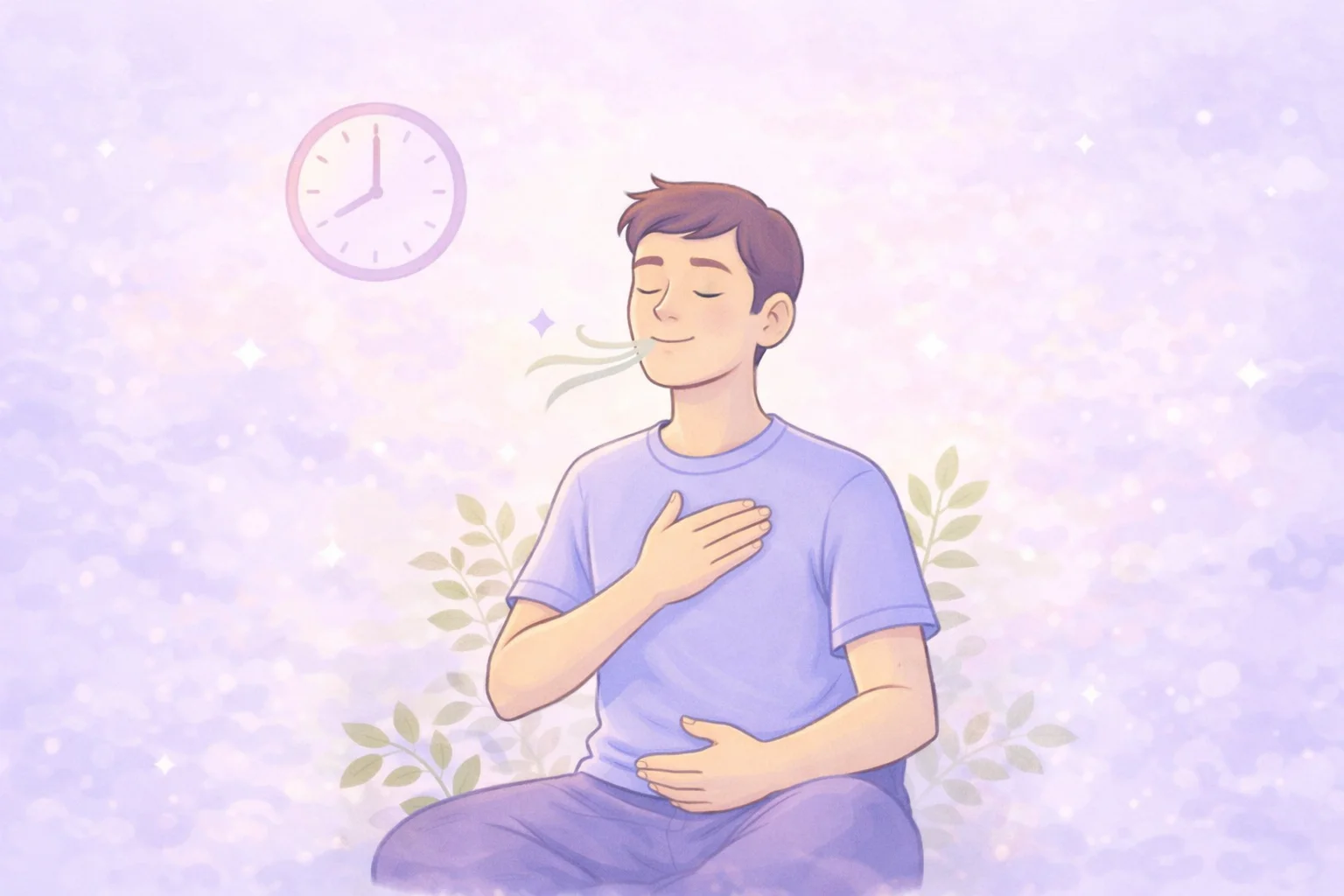
- Sit or stand comfortably. Place one hand on your belly.
- Do cyclic sighing for 60–90 seconds (two short inhales, one long exhale).
- End with two slow belly breaths, noticing the hand rising and falling.
Practical tips for safe, effective practice
Make it work in daily life
- Start with micro-doses: 1–3 minutes several times a day builds familiarity and reduces avoidance.
- Anchor to an existing cue: do the 2-minute reset after you sit down at your desk, before a meeting, or when you step away from a screen.
- Keep instructions simple: choose one or two techniques you can remember easily rather than trying to rotate many.
When to be cautious
Most people can safely try these micro-practices, but stop or modify if you feel dizzy, lightheaded, or panicky. Rapid or forceful breathing can make some people feel worse; if that happens, return to normal breathing and try a gentler pace or grounding senses instead. If you have respiratory or cardiac conditions, check with a clinician before starting new breathwork routines.
If you experience strong physical symptoms
Seek medical advice if breathwork causes chest pain, fainting, or severe dizziness. These practices are not a replacement for professional mental health care when anxiety is chronic or severe.
Small steps to make micro-practice a habit
Routine over intensity
- Pair practice with daily routines (after brushing teeth, during coffee, or after phone notifications).
- Keep a tiny log: one line per day noting whether you did a 2-minute reset — consistency matters more than duration.
- Be patient: micro-habits build familiarity so that a quick breath reset becomes an automatic tool when anxiety appears.
Frequently Asked Questions
Will these mini practices replace therapy or medication?
No. Short breathwork and micro-mindfulness can help reduce immediate anxiety and improve coping between sessions, but they are not a substitute for professional therapy or medication for diagnosed anxiety disorders. Use them as a complementary self-help tool and consult a clinician for persistent symptoms.
How often should I practice to see benefits?
Even brief daily practice (1–3 minutes, once or twice a day) can increase familiarity and make techniques easier to use in moments of stress. For longer-term reductions in baseline anxiety, combine micro-practice with regular mindfulness sessions or professional care.
Can breathwork ever make anxiety worse?
Some people experience lightheadedness, tingling, or increased panic with forceful or rapid breathing. If that occurs, slow your pace, return to natural breathing, or switch to sensory grounding. If adverse effects persist, stop and seek professional guidance.
References
- ‘Cyclic sighing’ can help breathe away anxiety — Stanford Medicine Stanford Medicine ↩ ↩
- Relaxation Techniques: What You Need To Know — NCCIH NCCIH ↩
- A science-backed guide to mindful breathing — National Geographic National Geographic ↩ ↩
