Mindful travel: breathwork, sleep tips, and easing travel anxiety
Written by the Begin Editorial Team and edited by a group of parents, teachers, pet lovers, sports enthusiasts, and foodies who practice mindfulness in everyday life. We focus on evidence-informed tools that fit real routines at home, at work, and in training.
In this article:
Travel can be exciting and exhausting at once. Small choices before and during a trip make it easier to manage nerves, get rest, and arrive ready to enjoy your destination.
This guide collects practical, low-friction strategies—planning steps, short breathwork routines, sleep hygiene for transit, and quick grounding exercises—that are easy to try on your next trip.
Why mindful travel helps
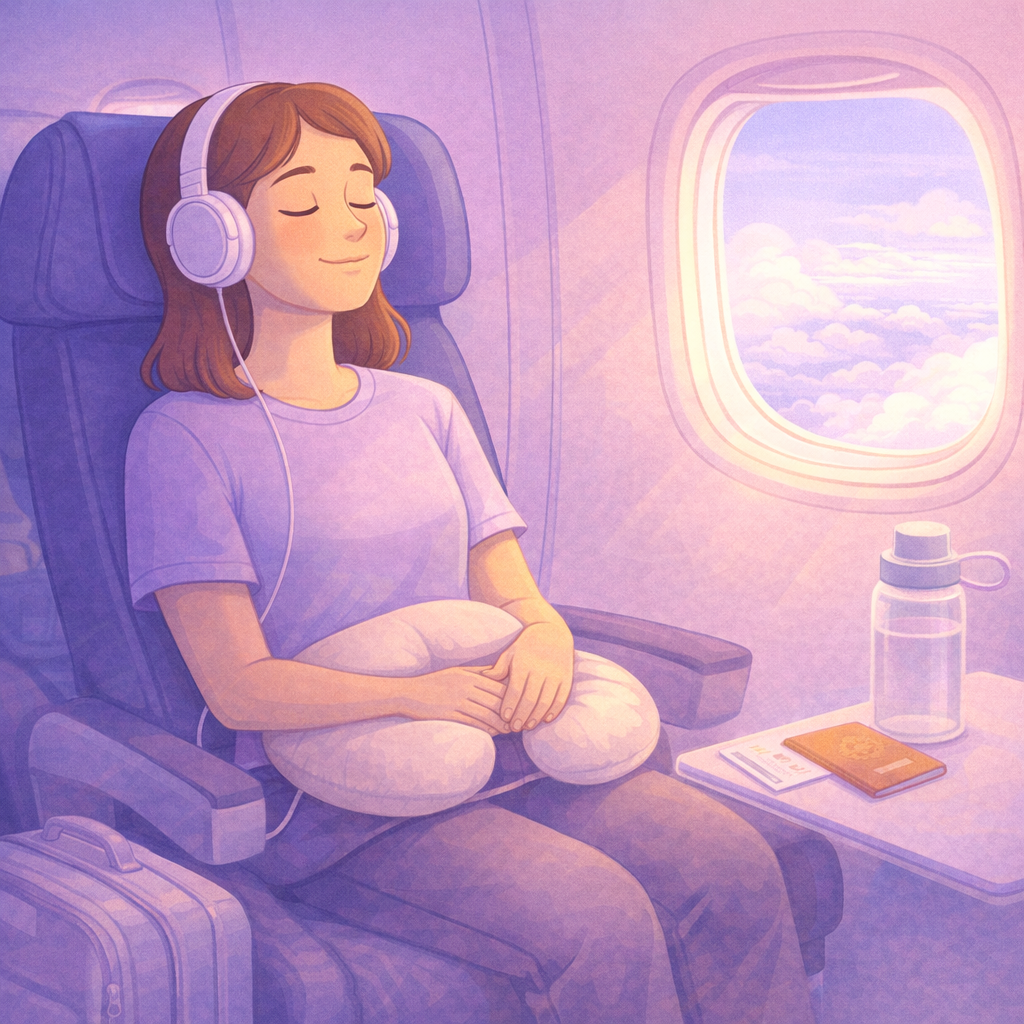
Mindful practices focus your attention on the present moment, which can reduce the intensity of worry and physical tension. Short routines—breathing, grounding, or brief body scans—are portable and require no equipment, so they’re well suited to airports, cabins, and lounges [1][3].
Start small
Even one 60-second breath or a 3-minute grounding routine can lower arousal and make subsequent steps—like boarding or trying to sleep—easier.
- Pick one practice to try before you pack.
- Repeat it during high-stress moments (security line, takeoff, layovers).
Before you go: planning and packing

Plan so you can relax
- Choose flexible tickets or add extra time between connections to reduce time pressure.
- Check seat maps and pick a seat that matches your needs (aisle to stand, window to reduce disturbances).
- Pack a small “calm kit”: noise-cancelling earphones or earbuds, an eye mask, a neck pillow, a light blanket or scarf, and any personal comfort items.
Having key items and realistic buffers in your itinerary reduces decision load and helps you deploy coping tools when you need them.
Health and medication notes
If you take prescription sleep aids, anxiety medication, or melatonin, plan these with your clinician. Over-the-counter options and supplements affect people differently—check dosing and timing before travel.
At the airport and boarding
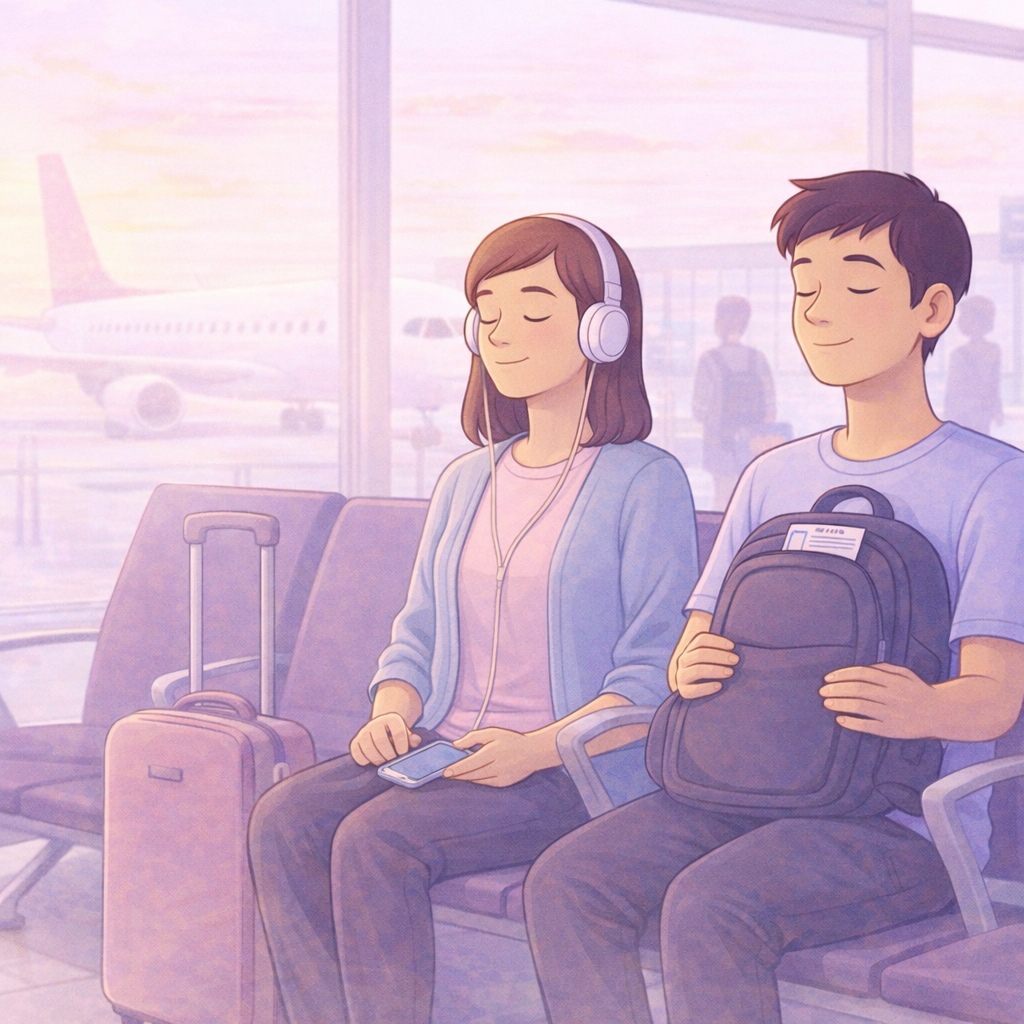
Quick routines to lower arousal
- 1–2 minute grounding: name 5 things you can see, 4 you can touch, 3 you can hear, 2 you can smell (or imagine), 1 you can taste. This sensory checklist helps shift attention from worry to present cues.
- Progressive muscle release: while seated, tense and release groups—feet, calves, thighs, shoulders, jaw—holding tension 3–5 seconds then letting go.
- Set a calming ritual: tea or a short walk before boarding to mark the transition into travel mode.
Security and devices
Follow airport rules for liquids and electronics. If you rely on an app for guided breathing or sound, download content offline in case of spotty service.
In‑transit breathwork and grounding
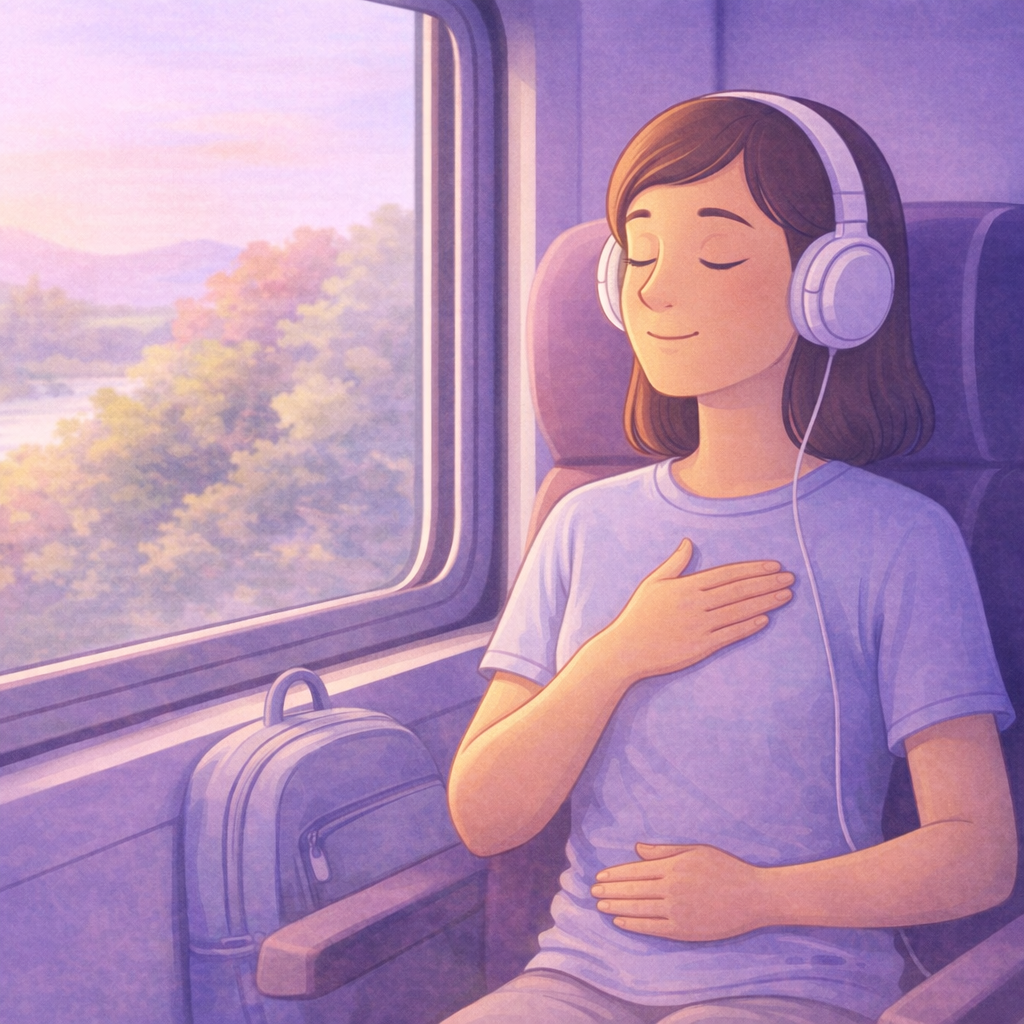
Simple, evidence-informed breathing practices
Short breathing exercises reduce sympathetic arousal and are practical on planes, trains, and buses. Start with techniques you can do seated and discreetly.
- Box breathing (4‑4‑4‑4): inhale 4 seconds, hold 4, exhale 4, hold 4. Repeat 3–5 cycles to reset your pace.
- Extended exhale (4‑6 or 4‑8): inhale 4 seconds, exhale 6–8 seconds. Lengthening the exhale tends to promote relaxation.
- Resonant breathing (about 5–6 breaths per minute): inhale 5 seconds, exhale 5 seconds. Slower breathing can reduce heart-rate variability tied to stress [3].
- If counting feels stressful, try a single 60-second mindful breath: notice the inhale and exhale without changing them.
Use headphones for a guided track or a quiet metronome app if it helps you keep a steady pace. If you have a medical condition that affects breathing, check with a clinician before trying extended breath holds.
Sleep on the move
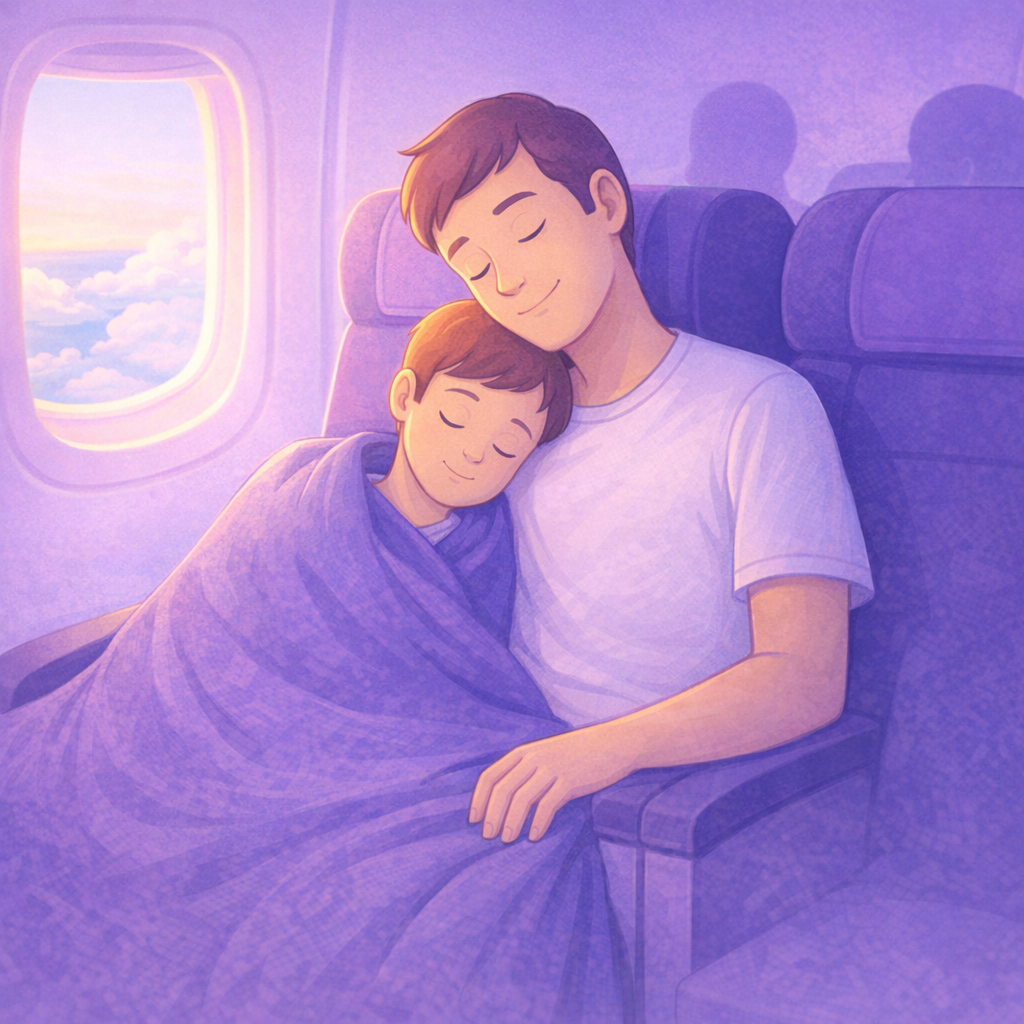
Make transit more sleep-friendly
- Create darkness: an eye mask plus a hooded sweater reduces light and visual stimulation.
- Reduce noise: earplugs or noise‑cancelling headphones plus a consistent sound (white noise, low-volume music) helps mask unpredictable sounds.
- Stabilize your head: a supportive neck pillow and seatbelt positioning reduce micro-awakenings from head bobbing.
- Mind your caffeine and alcohol: both can fragment sleep; try to avoid or limit them in the 4–6 hours before your planned sleep period.
- Time your sleep to your destination when possible: short naps are restorative, but long naps can worsen jet lag if they conflict with destination night.
Sleep aids and safety
Short-term sleep aids are used by some travelers, but they carry risks—grogginess, interactions, or impaired alertness. Discuss options with a clinician and avoid operating vehicles after use.
Tools and tech
Apps for short practices
Choose apps that offer short guided breathing, body scans, or grounding—download sessions for offline use.
- Pick 1–2 short guided tracks you like.
- Practice them at home to build familiarity.
Physical items to pack
A small kit reduces friction when stress hits.
- Lightweight neck pillow and eye mask
- Earplugs or ANC earbuds
- Reusable water bottle and snacks
Technology helps, but simple planning still matters: jet lag guidance emphasizes light, timing, and sleep routines, while paced breathing and a short sensory checklist are free tools you can practice anywhere [2][1].
Frequently Asked Questions
Will short breathing exercises really help my anxiety on a plane?
Yes—brief, paced breathing and grounding can lower immediate physiological arousal and interrupt rumination. They’re not a cure for persistent clinical anxiety, but they’re a low-effort tool to use during travel. For severe or frequent anxiety, consult a mental health professional.
Are sleep supplements safe for flights?
Some people use melatonin or short-acting sleep aids for transit. Effects and safety vary—talk to your healthcare provider about dosing, timing, and interactions. Avoid driving or navigating unfamiliar environments if you feel groggy after using a sleep aid.
Can I practice breathwork discreetly on a plane?
Yes. Choose techniques that don’t require vocalization or visible movement—paced breathing with hands resting in your lap or a single mindful breath are discreet and effective.
Start by choosing one or two practices from this guide and try them on a short trip or even during a local commute. The more you practice in low-stress moments, the easier they become when you need them most.
Quick takeaways
Plan practical comforts, use short breathwork and grounding routines during high-arousal moments, and follow simple sleep hygiene steps on the move.
- Pack a calm kit (eye mask, earplugs, neck pillow).
- Use 1–3 minute breathwork routines to reduce arousal.
- Limit caffeine and time naps to align with your destination.
Sources
- Anyone Can Meditate — No Tech Required. If You Want a Learning Aid, These Apps Can Help. NYT guide on meditation and apps ↩ ↩
- Jet Lag: Symptoms, Causes, and How to Cope — Sleep Foundation Sleep Foundation jet lag guide ↩
- A science-backed guide to mindful breathing. National Geographic breathing guide ↩ ↩
