Mindfulness Practices to Reduce Everyday Stress
Written by the Begin Editorial Team and edited by a group of parents, teachers, pet lovers, sports enthusiasts, and foodies who practice mindfulness in everyday life. We focus on evidence-informed tools that fit real routines at home, at work, and in training.
In this article:
Mindfulness doesn't need to be a long ritual. Short, focused practices can ease the physiological effects of stress and give you a practical reset during a busy day.
Below are simple breathing techniques, brief meditations you can do anywhere, and habit tips that make mindfulness portable and repeatable.
Why mindfulness helps
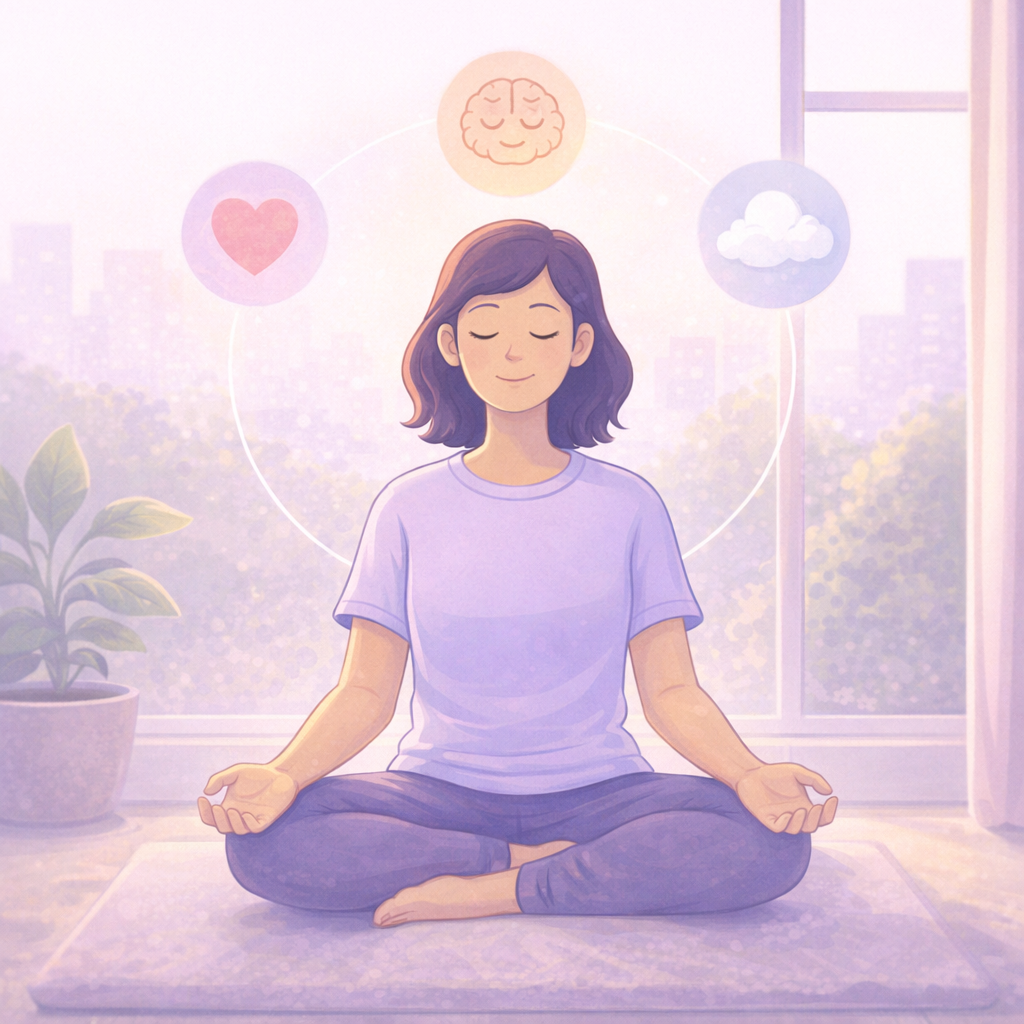
Mindfulness practices—attention to the present moment without judgment—can reduce the intensity of stress reactions and improve emotional regulation. Short practices influence breathing, heart rate, and attention, which together lower the body’s alarm response and make stress feel more manageable. [1] [4]
- Reduces rapid, shallow breathing and encourages slower, deeper breaths.
- Shifts attention away from repetitive worries and rumination.
- Provides a quick, repeatable way to interrupt a stress loop.
Quick breathing practices (2–5 minutes)
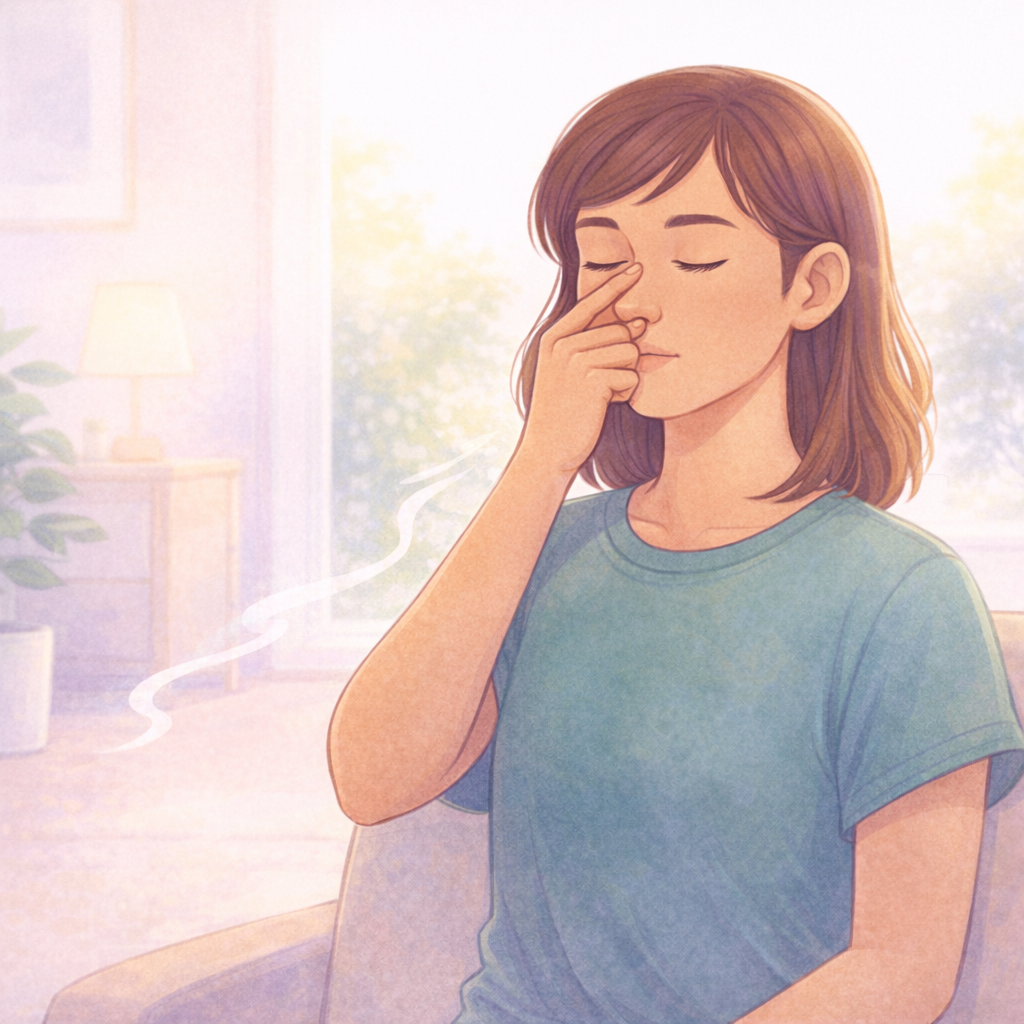
Breathing exercises are the fastest way to change your physiological state. Try these short, structured techniques when you notice tension.
- Box breathing (4–4–4–4) — Inhale 4 seconds, hold 4 seconds, exhale 4 seconds, hold 4 seconds. Repeat 3–5 times. Structured breathing is one practical tool for managing acute stress responses. [3]
- 4–6–8 paced breathing — Inhale 4 seconds, exhale 6–8 seconds. Keep the inhale gentle; focus on extending the exhale to activate the relaxation response.
- Diaphragmatic (belly) breathing — Place one hand on your chest, one on your belly. Breathe so the belly rises more than the chest. Five slow, full breaths can reduce tension.
Fast reset
If you're very short on time, take three slow diaphragmatic breaths with attention on the breath. It reliably reduces acute stress cues.
Short mindfulness meditations (5 minutes or less)
Short meditations focus attention and build tolerance for uncomfortable thoughts or sensations. You don't need a cushion—these fit into breaks, commutes, or a quiet corner.
- One-minute grounding: Name 5 things you see, 4 things you can touch, 3 sounds, 2 smells, 1 taste or breath—slowly and with attention.
- Three-minute breath awareness: Sit comfortably, follow the breath for three minutes. When the mind wanders, gently return to the inhale or exhale.
- Body-scan (5 minutes): Slowly move attention from toes to head, noticing sensations without trying to change them.
Clear guidance can help beginners by providing structure and cues. You can start with simple breath awareness, body scans, or other basic mindfulness practices before deciding whether an app is useful. [2]
Tools and apps — use them intentionally
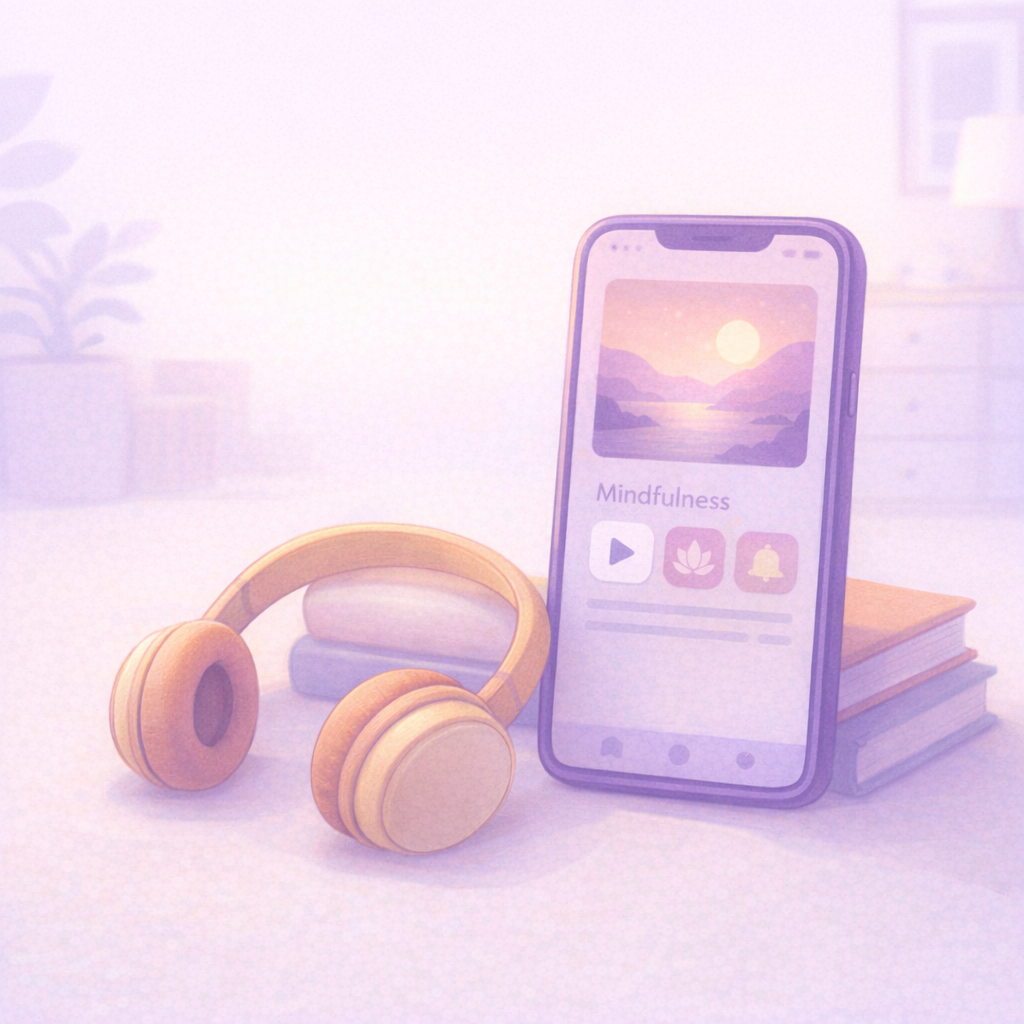
Apps can make mindfulness accessible, but the goal is a simple practice you repeat. Use tools to learn techniques, not to replace built-in daily habits.
Guided practice apps
Short, narrated sessions (1–10 minutes) that teach breathwork and body scans.
- Good for learning structure and staying consistent
- Look for short-session libraries and offline options
Reminder + habit apps
Simple timers, nudges, or streak trackers help make practice consistent.
- Set a 1–3 minute daily reminder
- Tie practice to an existing habit (after brushing teeth, before lunch)
Breath timers & cues
Apps that guide paced breathing with visual or haptic cues.
- Use these for quick resets at work or before meetings
- Prefer gentle, unobtrusive signals
Audio libraries
Short soundscapes or guided meditations for transition moments (commute, break).
- Helpful when your attention drifts
- Choose brief tracks to avoid getting distracted
Recent app roundups and public self-help resources list free and low-cost options; choose a tool that fits your schedule and privacy preferences. [6] [7]
Build a daily habit that sticks
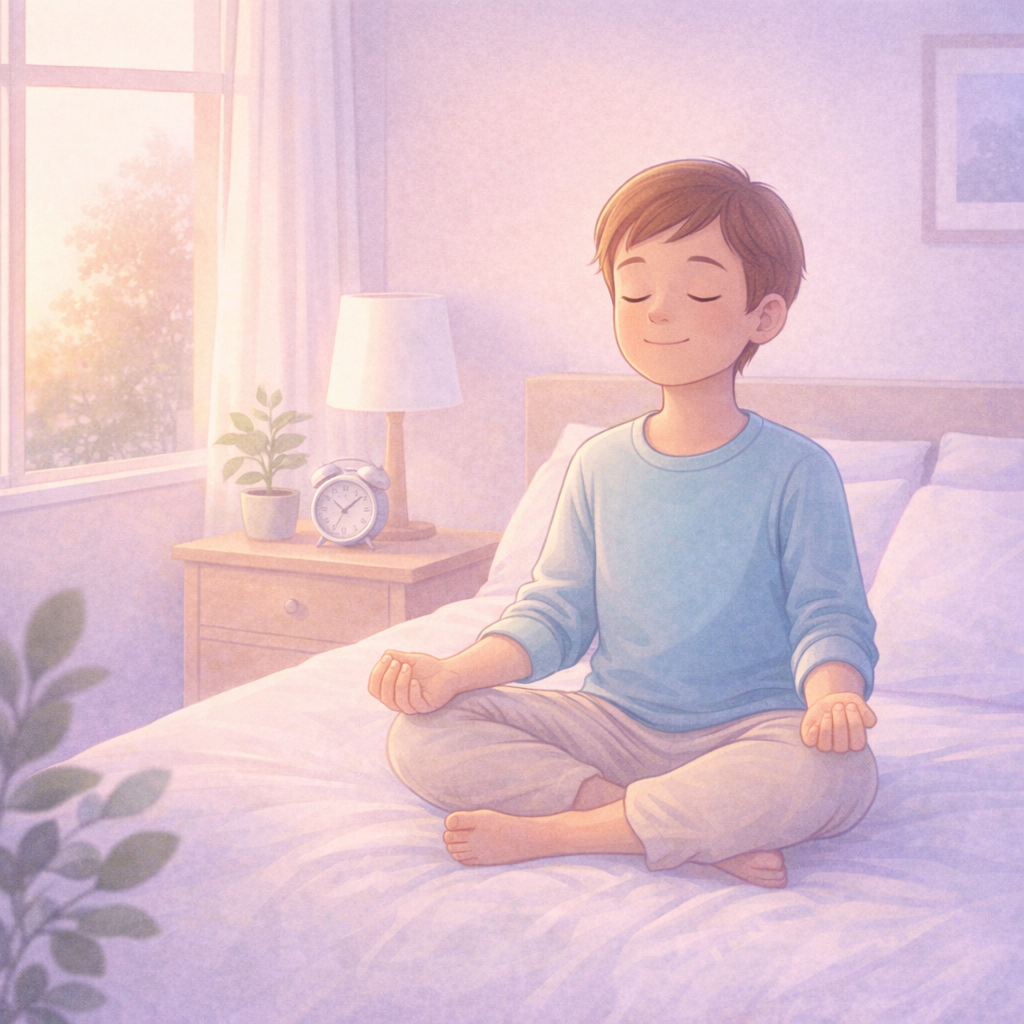
Practical steps
- Start very small: one minute of focused breathing per day is a reliable first step.
- Anchor practice to an existing routine (e.g., after morning coffee).
- Be consistent, not perfect: missing a day is not a failure—return the next opportunity.
- Use a simple cue: a phone alarm, an object on your desk, or a moment between tasks.
Sustainable practice
Short, repeatable practices are more effective long-term than occasional long sessions. Aim for regularity over duration.
Frequently asked questions
Answers below address common beginner concerns. If you have ongoing anxiety or distress that affects daily life, consider reaching out to a healthcare professional.
Frequently Asked Questions
How long before I notice benefits?
People often notice immediate short-term relief after a brief breathing exercise. For more consistent changes in how you respond to stress, aim for daily practice over several weeks.
Can I do these practices at work?
Yes. Short breathing exercises and one- to three-minute meditations can be done at your desk, in a restroom, or on a walk. Pick discreet techniques if you prefer privacy.
Are apps necessary?
No. Simple breathing techniques and short, self-guided meditations are effective without technology, but apps can help you keep your practice consistent.
Quick takeaways
Short, structured breathing and brief mindfulness practices can reduce acute stress and are easy to build into daily life. Start small, be consistent, and use tools only as aids.
References
- Mindfulness Meditation — American Psychological Association APA ↩
- Meditation and Mindfulness: Effectiveness and Safety — NCCIH NCCIH ↩
- Stress Management Tools and Resources — American Psychological Association APA ↩
- Mind and Body Approaches for Stress: What the Science Says — NCCIH NCCIH ↩
- Relaxation Techniques: What You Need To Know — NCCIH NCCIH
- Find Your Calm With These Soothing Meditation Apps for 2025 — CNET CNET ↩
- Mental Health Self-Help Guides, Tools and Activities — NHS NHS ↩
