Sleep anxiety: Breathwork, bedtime mindfulness, and practical sleep hygiene
Written by the Begin Editorial Team and edited by a group of parents, teachers, pet lovers, sports enthusiasts, and foodies who practice mindfulness in everyday life. We focus on evidence-informed tools that fit real routines at home, at work, and in training.
In this article:
Worry, rumination, and an activated nervous system can make falling or staying asleep harder. Small, consistent steps — brief breathing exercises, short mindfulness practices, and few practical bedroom changes — can reduce the activation that keeps you awake.
This guide focuses on simple, low-risk strategies you can try tonight. If anxiety or sleep problems are severe or long‑standing, talk with a healthcare professional for personalized care.
Understanding sleep anxiety
Feeling anxious at bedtime is common. Racing thoughts, worry about next-day tasks, or physical signs of arousal (racing heart, shallow breathing) can make falling asleep difficult. Research and clinical guidance note a bidirectional link: anxiety can disrupt sleep, and poor sleep can increase daytime anxiety.[1]
The goal here is not to eliminate all worry immediately, but to reduce physiological arousal and create reliable cues that signal your body it’s time to rest.
Quick start steps
- Set a consistent sleep window: aim to go to bed and wake up within the same one‑hour window each day.
- Limit evening stimulants: avoid caffeine and nicotine within several hours of bedtime.
- Reduce screen exposure 30–60 minutes before bed or use low-blue-light settings.
- Create a short, calming pre‑sleep routine: 5–15 minutes of low‑effort activities (reading, light stretches, breathwork).
- Keep the bedroom cool, dark, and quiet; use earplugs or a white‑noise machine if helpful.
Small changes add up
You don’t need a long ritual. A consistent, short routine repeated nightly is often more effective than an elaborate but inconsistent one.
Breathwork for bedtime
Paced breathing can lower physiological arousal and promote relaxation. Controlled breathing techniques have been shown to improve sleep quality in some studies and are low risk for most people.[2]
Two easy breathing exercises to try
- 4‑7‑8 breathing — Inhale through your nose for 4 counts, hold for 7, exhale slowly through your mouth for 8. Repeat 3–4 times and notice the breath slowing.
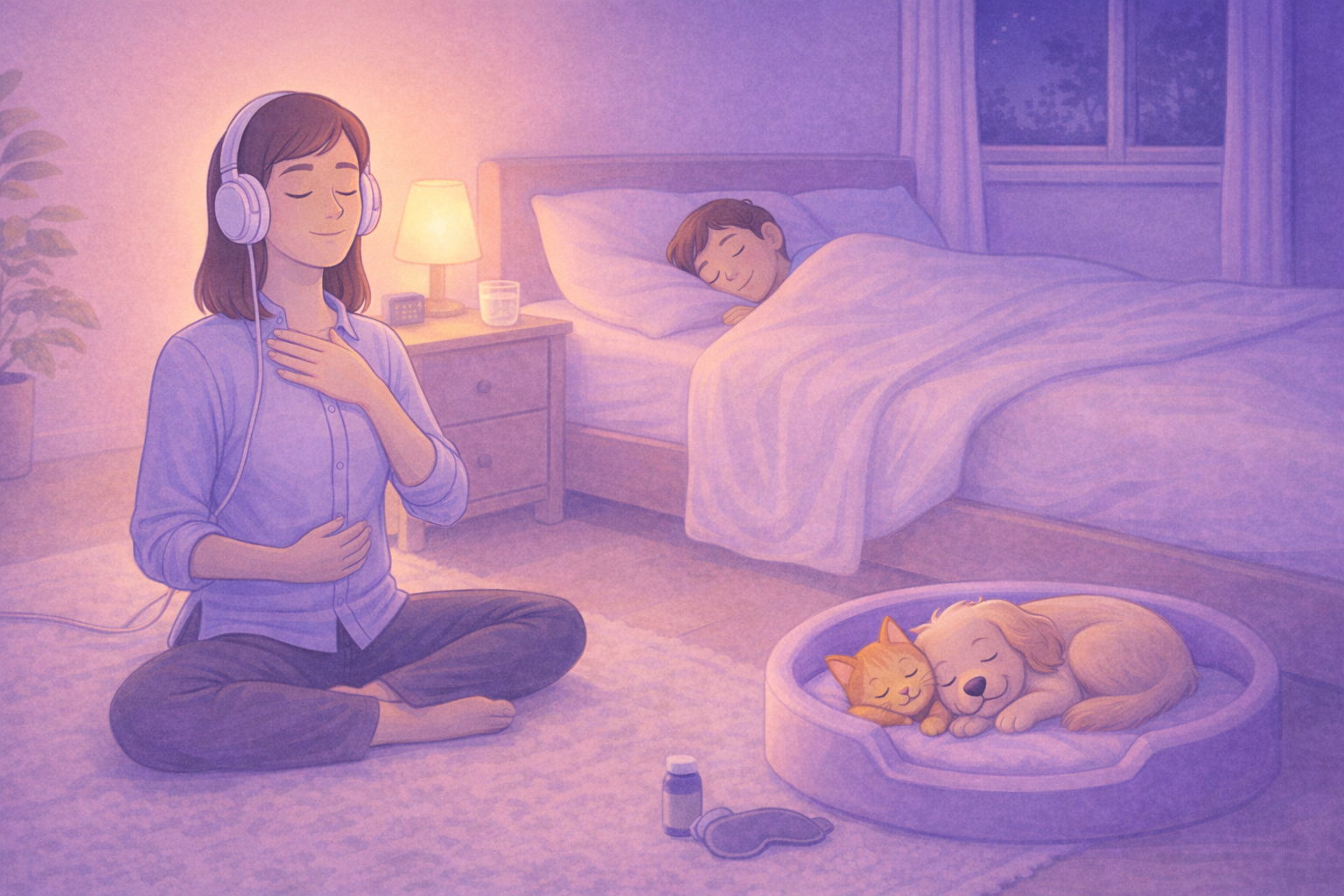
- Paced diaphragmatic breathing — Breathe in for 4–5 seconds, breathe out for 6–8 seconds (aim for ~6 breaths per minute). Place one hand on the chest and one on the abdomen; focus on the belly rising.
- If you feel lightheaded, shorten counts and resume normal breathing. The aim is steady, comfortable breaths, not forced inhalations.
How to fit breathwork into your routine
Do 3–10 minutes of a breathing exercise right before lights out, or during a brief wake‑up at night to reduce reactivity and prepare to return to sleep.
Bedtime mindfulness practices
Short, guided mindfulness exercises can shift attention away from worry and toward present sensations. Even 5–10 minutes can be calming for many people.
- Body scan: slowly notice sensations from toes to head without trying to change them.
- Progressive muscle relaxation: tense a muscle group for 3–5 seconds, then release; move progressively through the body.
- Guided imagery: imagine a safe, relaxing place with details (sights, sounds, textures).
- Brief noting or labeling: silently name thoughts ("planning," "worry") then let them go, returning attention to the breath or body.
If you prefer an app or audio guide, choose short sessions labeled for sleep or relaxation. Look for programs that let you preview the instructor’s voice and approach.
Sleep-hygiene checklist
Environment
Cool (around 60–67°F/15–19°C), dark, and quiet; reserve bed for sleep and intimacy when possible.
Schedule
Consistent bedtime and wake time, even on weekends (aim for <1-hour difference).
Evening habits
Limit heavy meals, alcohol, and intense exercise within a few hours of bed.
Bedroom cues
A short pre-sleep routine (breathwork, reading) so your body learns the signals for sleep.
Troubleshooting common patterns
Waking at night with worry
If you wake and ruminate, try a short in‑bed strategy: 2–3 minutes of paced breathing or a brief body scan. If thoughts persist, get out of bed for 10–15 minutes and do a low‑stimulus activity (dim light, calm breathing) before returning to bed.
Night sweats or physical symptoms
Nighttime anxiety can include physical symptoms such as sweating, a racing heart, or tense breathing. If night sweats are new, severe, or accompanied by other symptoms, check with a clinician to rule out medical causes.[3]
When to seek professional help
Consider professional advice if sleep problems are lasting several weeks, causing daytime impairment, or if anxiety feels unmanageable. A clinician can evaluate for insomnia, anxiety disorders, or other conditions and discuss treatments.
Putting it together
Combine a small, consistent pre‑sleep routine (3–10 minutes of breathwork or a short mindfulness exercise) with basic sleep‑hygiene changes. Track what you try for two to three weeks to see what helps. Many people notice incremental improvements rather than an immediate cure.
If you want structure, pick one breathing exercise and one mindfulness practice to use nightly, and keep environmental changes simple and consistent.
Frequently Asked Questions
How long before bed should I stop using screens?
Aim for 30–60 minutes of reduced screen time before bed. If that’s not feasible, lower screen brightness, enable blue‑light filters, or switch to content that isn’t emotionally activating.
Can breathing exercises cure chronic insomnia?
Breathwork can reduce arousal and help with sleep onset for some people, but chronic insomnia often benefits from a broader approach (cognitive behavioral strategies, consistent sleep scheduling, and medical evaluation). If insomnia is persistent, consult a clinician.
What if I wake up at 3 a.m. and can’t get back to sleep?
Try a short, non‑stimulating strategy: 2–5 minutes of paced breathing or a body scan. If you can’t return to sleep within about 20 minutes, get out of bed and do a quiet activity with dim lighting until you feel sleepy again.
References
- Anxiety and Sleep — Sleep Foundation Sleep Foundation ↩
- The Effect of Breathing Exercises on Sleep Quality: A Systematic Review and Meta-Analysis — Frontiers in Sleep Frontiers in Sleep ↩
- Anxiety at Night — Sleep Foundation Sleep Foundation ↩
