Begin

For Little Minds

Kids Mindfulness

Simple Tools That Help Children Feel, Focus, and Sleep Better

Children feel big emotions (frustration, anxiety, anger, restlessness) but they don't yet have the tools to understand or manage them. That's not a character issue. It's a development issue. The good news is those tools can be learned, and they work faster than most parents expect.

Begin's Kids section is a complete mindfulness toolkit for children ages 3–12. Short, playful, animal-themed sessions guided by Luna, a warm, patient, child-friendly voice designed specifically for young listeners.

Try for Free
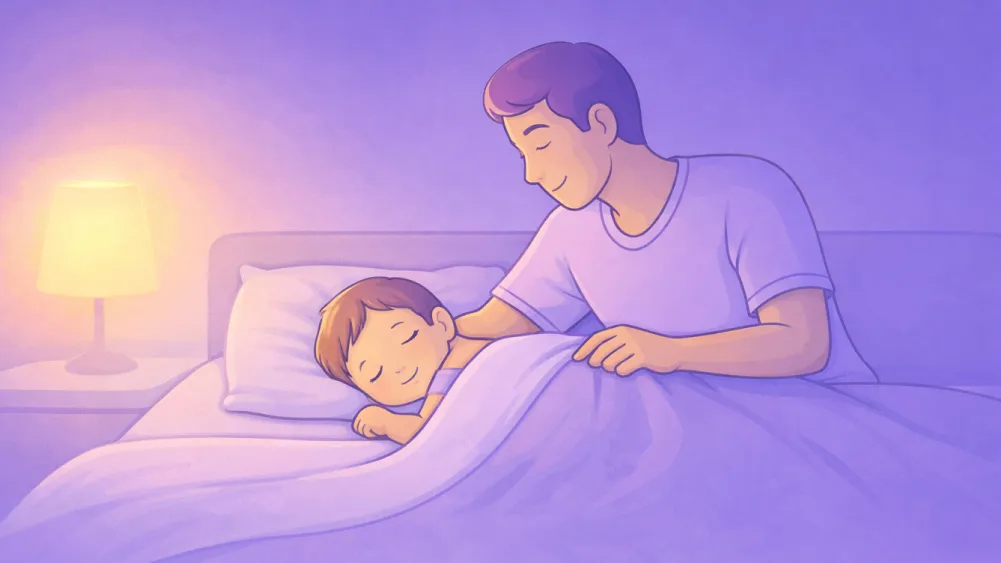
Parent and child using Begin kids mindfulness

What Begin Offers for Kids

The Kids section in Begin has six tabs, each designed for a different moment in a child's day:

Sessions

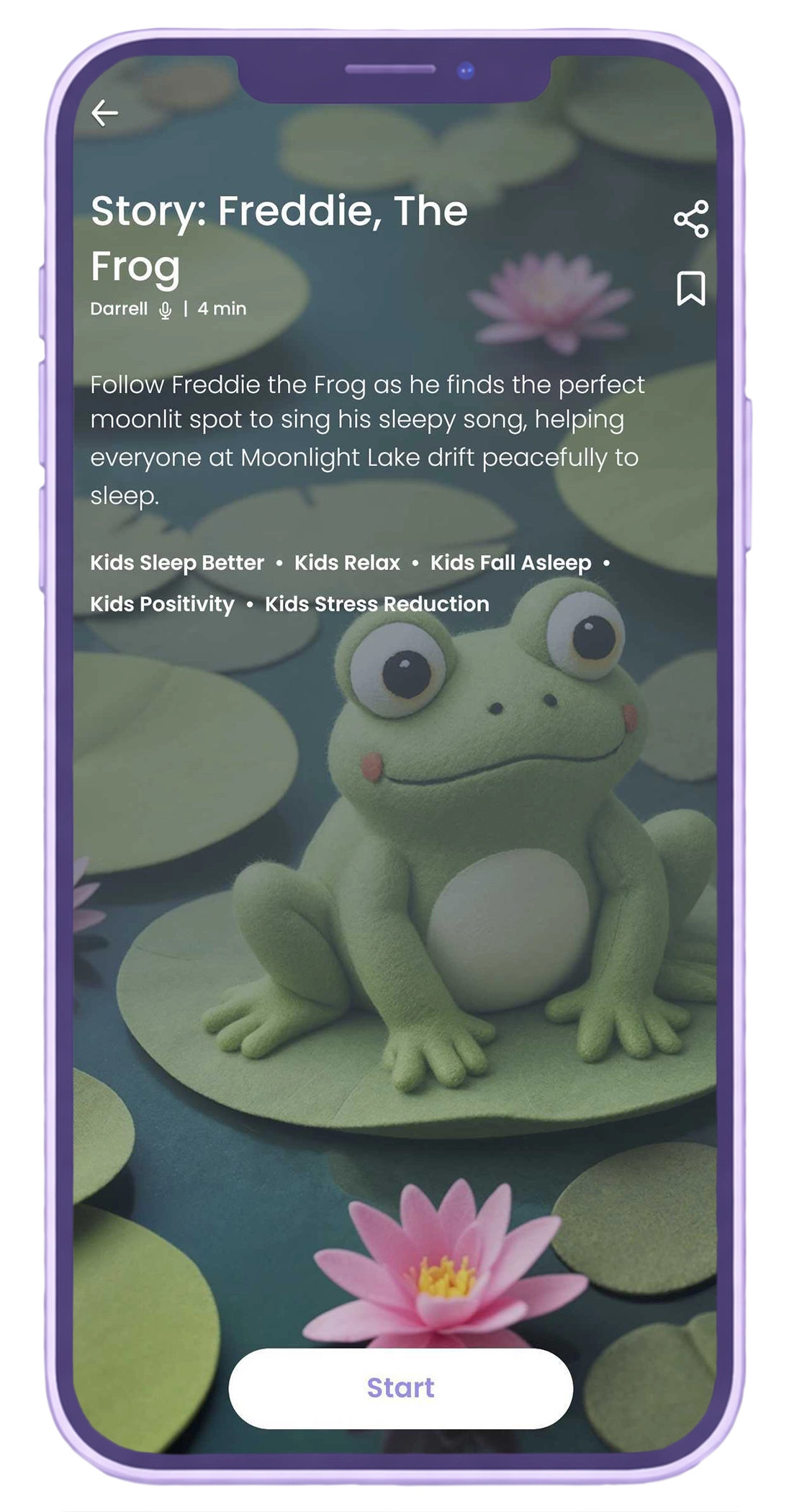
Four original bedtime stories, plus two guided sleep meditations. Designed for the transition between daytime and sleep.

Dragon's Breath for Confidence · 3 min

Children pretend to be dragons — inhaling deeply and exhaling imaginary fire. This transforms a breathing exercise into play, while also releasing tension and building self-confidence.

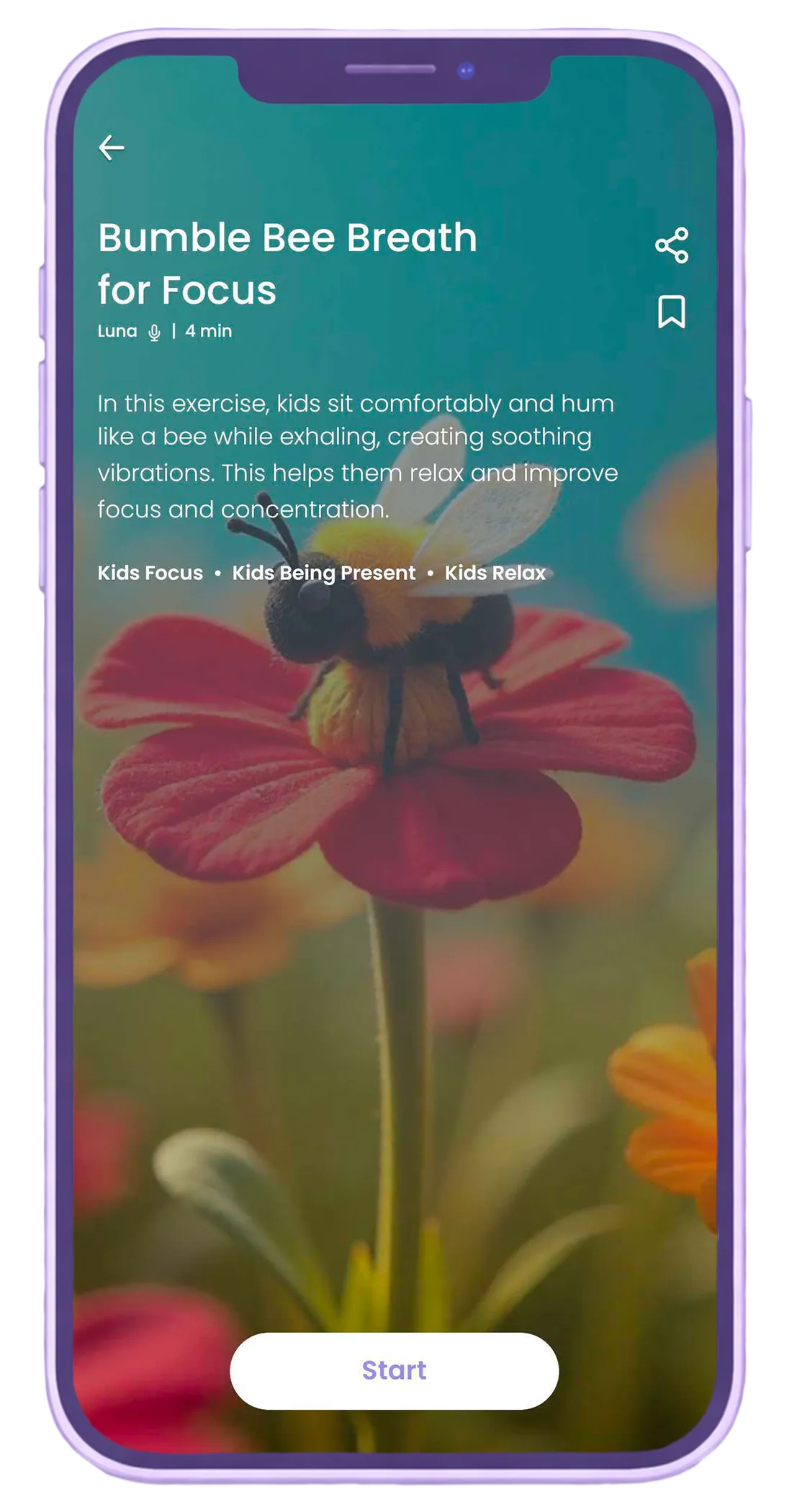
Bumble Bee Breath for Focus · 3:45 min

Children hum like a bee as they exhale, creating soothing vibrations. The buzzing keeps them focused on the breath and engages the parasympathetic nervous system. Good for calming restless energy.

Bubble Breathing for Calmness · 4 min

Children visualize blowing bubbles with each breath — letting go of worries and fears with every exhale. Teaches the basic exhale-release pattern in a way that clicks immediately.

Also in this section: Bear Breathing to Feel Calm and Strong (3:14 min) · Bunny Breath to Relax and Focus (2:56 min) · Blowing Candles for Calm and Happiness (4 min) · Belly Breathing with a Special Friend (4:37 min)

Begin kids breathing session

Why It Works — The Science

Early emotional-regulation skills are associated with better attention, social functioning, and wellbeing. Mindfulness and breathing practices can be helpful tools for some children, particularly when they are short, playful, and practiced with adult support.

The prefrontal cortex — responsible for emotional regulation — develops rapidly in the first 12 years of life, which is why this period is often considered an important window for building these habits.

Short, playful sessions are more effective for children than longer, adult-style meditations.

A 3-minute Dragon's Breath session that a child genuinely engages with is more valuable than a 20-minute session they resist.

Begin's kids content is designed around this: every session is short, every technique is wrapped in imagination or animal imagery, and nothing feels like 'homework.'

The animal-themed breathing techniques work because children learn through narrative and embodiment.

When a child pretends to be a bear waking from hibernation, they're not just breathing, they're cognitively engaged, emotionally present, and developing a positive association with the practice.

That association is what makes the habit stick.

When to Use Begin with Children

Morning meltdowns or school anxiety:

Bear Breathing or Bunny Breath (3 min). Quick, energizing, grounding, helps children feel capable before a hard day.

After school emotional discharge:

Dragon's Breath or Fireworks Meditation. Releases built-up energy in a controlled, positive direction.

Homework resistance or trouble focusing:

Homework resistance or trouble focusing: Bumble Bee Breath (3:45 min). The humming gives children something physical to focus on, which can help settle restless energy before sitting down to work.

Anger or big feelings:

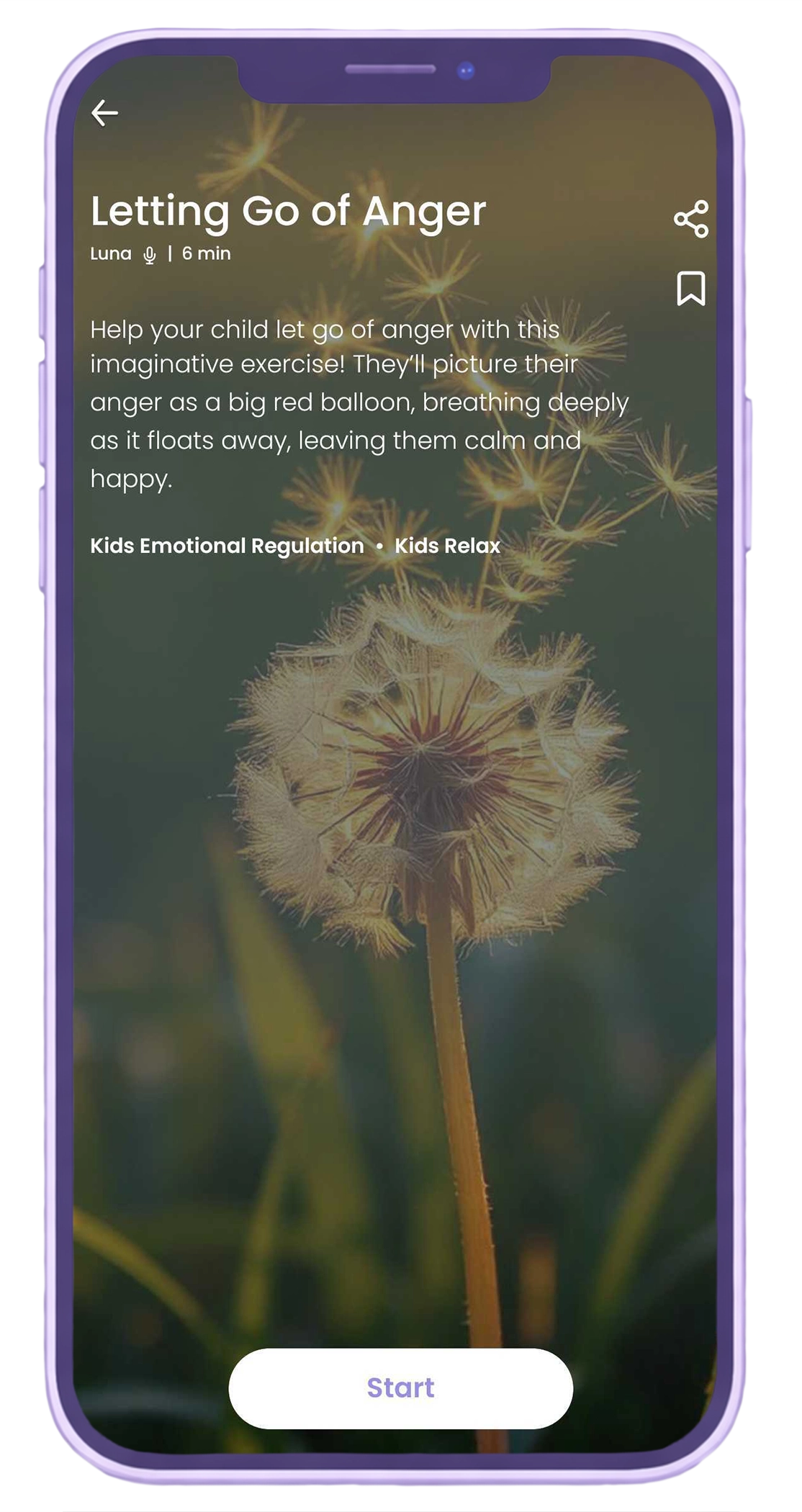
Letting Go of Anger (6 min) or Magic Hands (5 min). Don't try these in the middle of a meltdown — use them as 5-10 minute preventive tools during calm moments.

Bedtime resistance:

Bedtime resistance: Start with one of the bedtime stories (4–5 min) and follow with Belly Breathing with a Special Friend (4:37 min). Many children find this sequence helpful for winding down.

Developed with Diana Rodrigues — Yoga, Meditation & Breathwork Specialist

BSc Communication Sciences · 1,500+ hours formal training in yoga, breathwork & meditation · Physiotherapy assistant background · BSc Psychology (2026)

View full profile →

Start tonight. Dragon's Breath takes 3 minutes.

The best time to give your child emotional regulation tools was years ago. The second best time is tonight. Open Begin, go to Kids → Breathing, and tap Dragon's Breath for Confidence. Do it together.

Try it for Free

FAQ

What age is Begin's kids content designed for?

The sessions with Luna are designed for ages 3–12, with most techniques being most effective between ages 4 and 10. Younger children (3–5) tend to respond best to the breathing exercises and stories. Older children (8–12) often engage more deeply with the meditation and visualization sessions.

Do kids need to know anything about mindfulness before starting?

No. In fact, we recommend starting with 'Intro to Kids Mindfulness — a Superpower!' (4:44 min with Jenica), which introduces the concept in child-appropriate language without any prior knowledge required.

How often should children practice?

Consistency matters more than frequency. With regular practice over several weeks, many children begin to use these tools more easily during everyday moments of stress. The easiest entry point is one breathing exercise before school and one bedtime story at night — that's less than 10 minutes a day total.

My child refuses to meditate. What should I try?

Start with something that feels like play, not practice. Dragon's Breath (3 min) and Bunny Breath (3 min) don't feel like meditation — they feel like pretending to be an animal. Most children who 'don't like meditation' will happily breathe fire like a dragon. Once they experience the calming effect, curiosity usually follows.

Can parents use the app together with their children?

Absolutely — and it's more effective when they do. Several sessions in the Pets section (particularly the meditation-with-pets sessions) are designed for adults but model mindful presence beautifully for children. And adult breathing sessions like Belly Breathing or 4-7-8 can be introduced to older children (9+) when they're ready.