Mindful Dog Walking: Transform Your Daily Strolls
Written by the Begin Editorial Team and edited by a group of parents, teachers, pet lovers, sports enthusiasts, and foodies who practice mindfulness in everyday life. We focus on evidence-informed tools that fit real routines at home, at work, and in training.
In this article:
As of 2026, millions of households navigate the daily routine of walking their dogs, yet this necessary task is often treated as a rushed chore rather than a moment of connection. You likely find yourself gripping the leash with one hand while scrolling through emails with the other, mentally preparing for the day's stressors.
But what if you could completely transform this daily obligation into a restorative, calming practice? In this comprehensive guide, you will learn exactly how to implement mindfulness into your routine walks to significantly improve both your mental well-being and your dog's happiness.
Mindful dog walking is the intentional practice of maintaining focused, non-judgmental awareness of your surroundings, your physical sensations, and your pet during a walk, free from digital and mental distractions. By the end of this post, you will have a practical toolkit to turn your routine strolls into moments of profound presence.
Quick Summary
- Mindful dog walking reduces human stress and canine anxiety by lowering cortisol levels.
- Engaging your five senses actively anchors your attention in the present moment.
- Allowing your dog to lead and engage in a “sniffari” fulfills their natural biological needs.
- Setting a clear intention before stepping out the door is critical for habit building.
What Is Mindful Dog Walking?
Mindful dog walking is not a complex, esoteric concept; it is simply the act of being entirely present while navigating the outdoors with your canine companion. Instead of walking on autopilot, you actively tune into the shared experience. This practice merges traditional walking meditation with the unique joy of observing your pet interact with the world.
The Science of Shared Presence
2024
Journal of Environmental Psychology study on mindfulness during nature walks
When you practice mindful dog walking, the biological benefits are immediate and measurable. A 2024 study published in the Journal of Environmental Psychology found that individuals who practiced mindfulness during nature walks reported a 22% greater decrease in perceived anxiety compared to those who walked while distracted by technology.
For dogs, this shared presence is equally vital. When owners are mentally present, they become more attuned to subtle shifts in their dog's body language, reducing the likelihood of stressful encounters and lowering the dog's overall resting heart rate.
How Mindful Dog Walking Benefits You and Your Pet
Integrating mindfulness into your daily routine yields compounding benefits that extend far beyond the 30 minutes you spend on the sidewalk.
Mental and Physical Health Improvements
For the human end of the leash, mindful dog walking acts as a natural pressure release valve. By actively shifting your focus away from future anxieties and past regrets, you regulate your central nervous system. This results in lowered blood pressure, decreased muscle tension, and a reduction in stress hormones.
Canine Enrichment
For the dog, a mindful owner means a slower, more deliberate pace. This allows the dog to engage in deep sniffing, which behavioral veterinarians note is one of the most mentally enriching and exhausting activities a dog can perform.
Building Oxytocin and Trust
When you observe your dog without rushing them, you are participating in a shared social activity. Research indicates that sustained, positive interaction and mutual attention between humans and dogs stimulate the release of oxytocin, often called the “bonding hormone,” in both species.
Essential Techniques for Mindful Dog Walking
Transitioning from a distracted walker to a mindful one requires a few actionable adjustments to your routine.
1. Set a Clear Intention
Before you even attach the leash, take a deep, grounding breath. Set a deliberate intention for the walk. Tell yourself that for the next 20 minutes, your sole responsibility is to exist outdoors with your dog. Leaving your phone on silent or keeping it zipped in a pocket is the most effective way to honor this intention.
2. Engage Your Senses
As you begin to walk, systematically tune into your five senses. Notice the specific shades of green in the trees or the way the sunlight hits the pavement. Listen to the distinct rhythm of your dog's paws and the ambient sounds of the neighborhood. Feel the texture of the leash and the temperature of the air against your skin. This sensory grounding prevents the mind from wandering back to your to-do list.
3. Practice Breath Awareness
Match your breathing to the physical rhythm of your walk. Try inhaling deeply for four steps, holding for one step, and exhaling for four steps. This technique turns the physical act of walking into a moving meditation, helping to stabilize your nervous system.
4. Let Your Dog Lead the “Sniffari”
Whenever it is safe to do so, allow your dog to dictate the pace. Instead of marching them in a strict heel, let them stop and investigate interesting scents. Observing their intense focus and natural curiosity can serve as a powerful anchor for your own mindfulness.
Overcoming Common Distractions
The modern world is engineered to capture our attention, making mindful dog walking a practice that requires conscious effort to maintain.
Managing Digital Interruptions
As of recent data, the average adult interacts with their smartphone over 100 times a day. When your phone buzzes in your pocket, the urge to check it is a conditioned reflex. To combat this, utilize “Do Not Disturb” modes or leave the device at home entirely. If you must bring it for safety, bury it deep in a backpack where it requires physical effort to retrieve.
Addressing the Reactive Dog Challenge
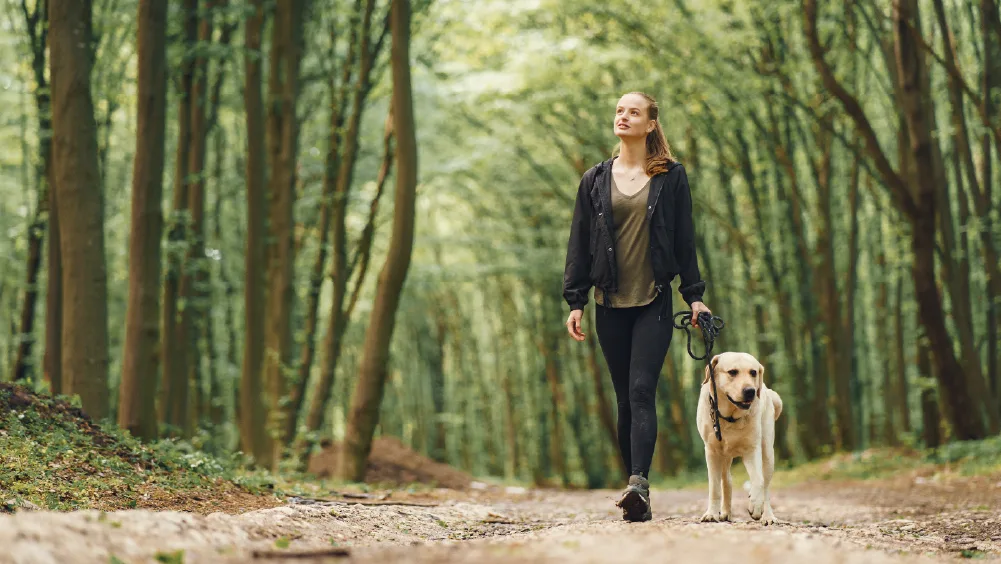
Mindful dog walking is often pictured as a serene stroll through a quiet forest, but the reality for many owners includes managing a reactive or fearful dog. Focus your awareness on scanning the environment and reading your dog's earliest signs of tension. By maintaining a clear, present mind, you can proactively redirect your dog before they react.
Establishing a Consistent Routine
You do not need to commit to an hour of perfect meditation to see results. Building a sustainable habit starts with small, manageable increments.
Start Small and Track Progress
Begin by dedicating just the first five minutes of your morning walk to mindful dog walking. Once you successfully navigate five minutes without distraction, gradually increase the duration. Many owners find it helpful to track their progress. Use a notebook to quickly jot down how you and your dog felt after a mindful walk versus a distracted one. Over time, this consistency will transform your daily chore into the most peaceful part of your day.
Conclusion
Mindful dog walking is a highly accessible and profoundly effective way to enhance your daily routine. By setting clear intentions, engaging your senses, and allowing your dog the freedom to explore, you actively reduce your own anxiety while fulfilling your dog's biological needs.
Remember that consistency matters far more than duration; even a few uninterrupted minutes of presence can dramatically strengthen the bond you share with your pet. Make the commitment today to leave your distractions behind and truly experience the walk.
Frequently Asked Questions
What is mindful dog walking?
Mindful dog walking is the practice of giving your full, undivided attention to the present moment, your physical environment, and your pet while on a walk, intentionally eliminating digital and mental distractions.
How do I start meditating while walking my dog?
You start meditating while walking your dog by leaving your phone on silent, focusing on the rhythm of your breath, and actively engaging your senses to observe the sights and sounds around you.
Does mindful walking tire a dog out more?
Yes, mindful walking tires a dog out more because it encourages a slower pace that allows the dog to sniff and explore, providing intense mental stimulation that burns significant energy.
Can I practice mindful dog walking with a reactive dog?
Yes, you can practice mindful dog walking with a reactive dog by focusing your heightened awareness on your dog's body language and environmental triggers, helping you proactively manage their behavior.
How long should a mindful dog walk be?
A mindful dog walk should be as long as you can comfortably maintain focus, typically starting with 5 to 10 minutes and gradually increasing as you build your attention span.
