Begin
For Teens

Mindfulness for Teens

Less Stress. Better Sleep. More Focus. In Under 10 Minutes a Day.

Exams, friendships, social media, sleep deprivation, the feeling that your brain never fully switches off. Being a teenager has always been hard. The difference now is the relentlessness of it — the notifications, the comparisons, the pressure to perform academically and socially at the same time.

Mindfulness doesn't fix any of that. But it gives you something concrete to do when anxiety spikes before a test, when you can't sleep at midnight because your thoughts won't stop, when you've read the same paragraph four times and nothing is going in. Begin has short, practical sessions — most under 10 minutes — built around exactly those moments.

No spiritual language. No sitting cross-legged for an hour. Just tools that work — backed by the same science that sports teams, surgeons, and high-performance athletes have been using for decades.
Try for Free
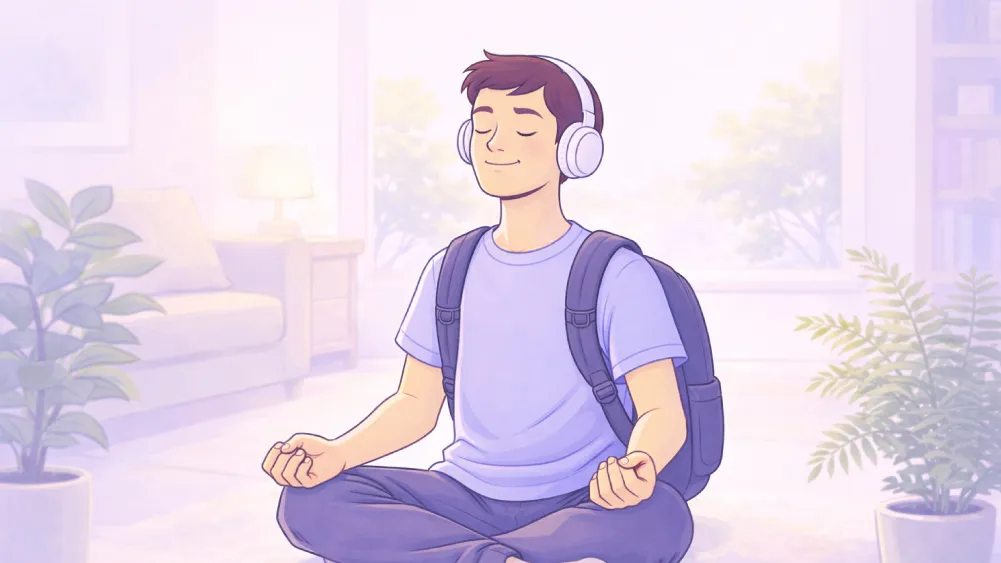
Teen using Begin mindfulness tools

What Begin Offers for Teens

Begin's adult sections are fully accessible from age 13 and upward. Here's what's most useful and when to use it.

When Exam Stress or Anxiety Hits

One of the most direct ways to influence your nervous system is through your breathing. When you're stressed, your breathing becomes shallow and fast — which keeps your body in a state of alertness. Slowing and pacing the breath can help shift things toward a calmer state, often within a few minutes.

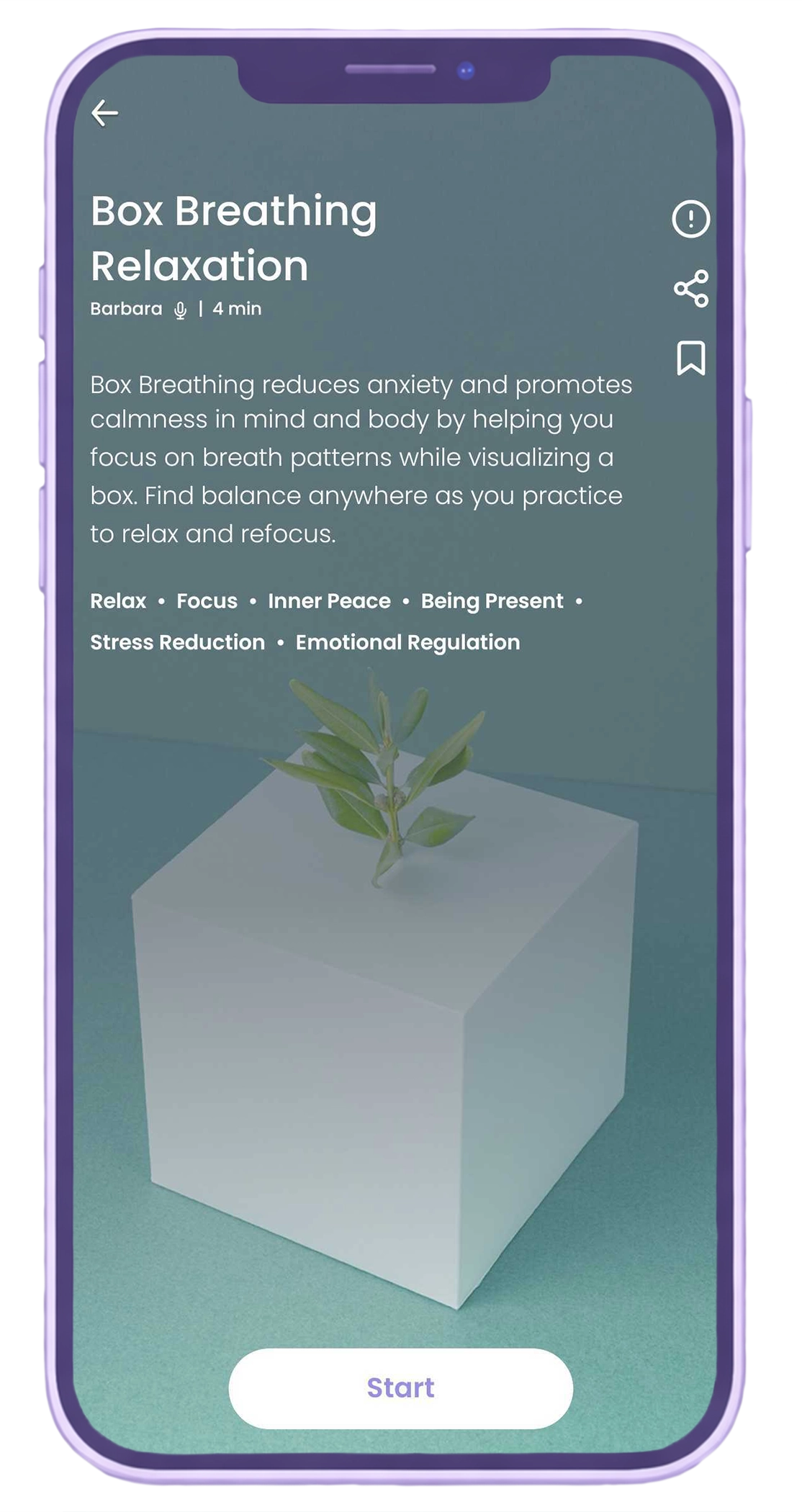
Box Breathing Relaxation · 4 min

4 seconds in, 4 hold, 4 out, 4 hold. One of the most studied stress-reduction techniques in high-performance contexts — used by military personnel, surgeons, and athletes before high-stakes situations. You can do it at your desk, in the bathroom before an exam, or anywhere.

Morning Calm: Easing Anxiety · 4:31 min

For the anxiety that's already there when you wake up — before you've even checked your phone. Breathing followed by visualization to release tension before it builds into the day. Particularly effective before exam days or difficult school situations.

Manage Strong Emotions: The RAIN Technique · 6 min

Recognize, Allow, Investigate, Nurture — a four-step approach to emotional regulation used in clinical mindfulness practice. For moments when anxiety, shame, or overwhelm are making it impossible to think clearly. Doesn't make the feeling disappear; makes it manageable.

Also useful: 4-7-8 Breathing to Unwind (4 min) · Star Breathing (5 min) · Coherent Breathing for Calm and Focus (4 min)

Begin app Box Breathing Relaxation session for teen stress

Why It Works — The Science

Emotions[1]

Adolescence is the period of the most intensive brain development since infancy.

The prefrontal cortex — responsible for emotional regulation, impulse control, and decision-making — is still actively developing until the mid-20s.

This means two things: teenagers are neurologically more vulnerable to stress and anxiety than adults, AND the brain is maximally plastic, meaning practices learned now have an outsized effect on long-term emotional resilience.

Well-being[2]

A 2013 study in Psychological Science found that two weeks of mindfulness training significantly improved working memory capacity, reading comprehension, and reduced mind-wandering in college students — the same attentional skills that matter in academic performance.

For teenagers, the practical takeaway is the same pattern Begin is built around: short sessions practiced consistently are more useful than occasional longer sessions.

Sleep[3]

For sleep specifically, research consistently links adolescent sleep deprivation to impaired memory consolidation, emotional regulation, and academic performance.

Begin's sleep sessions are designed to support the transition from alertness to rest — addressing sleep onset in particular, rather than sleep in general.

Focus[4]

For focus and academic performance, a 2013 study in Psychological Science found that just two weeks of mindfulness training significantly improved reading comprehension and working memory capacity — and reduced mind-wandering.

These are exactly the skills exam performance depends on.

Breathwork[5]

Breathwork tends to produce relatively quick effects compared to other mindfulness practices.

A 2017 study in Frontiers in Psychology found that slow paced breathing at 6 breaths per minute — the rate of Coherent Breathing — was associated with reduced self-reported stress and shifts in autonomic markers, including HRV. These effects were observed within a single session, though individual responses vary.

How to Actually Use Begin — Practical Entry Points

Before an exam or test:

Box Breathing Relaxation (4 min, Barbara) in the bathroom or outside the exam room. Takes less than 5 minutes. Changes the physiological state you walk in with.

When you sit down to study and can't concentrate:

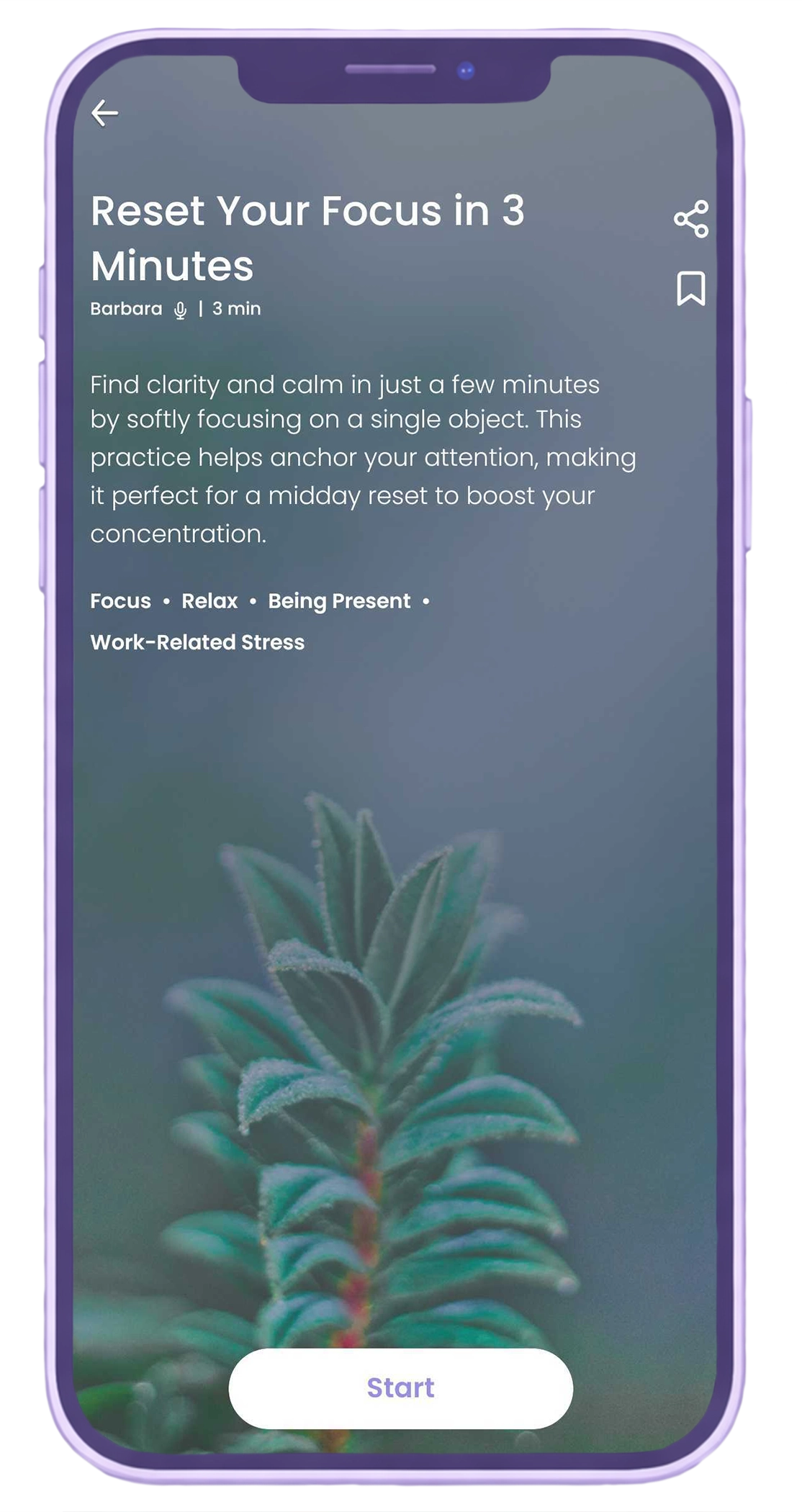
Reset Your Focus in 3 Minutes (3 min, Barbara) followed by Moodscapes → Productivity & Focus or Nature Soundscapes as background. That's the stack. Do it every time before a study session for two weeks and notice what happens.

When you're in an overthinking spiral:

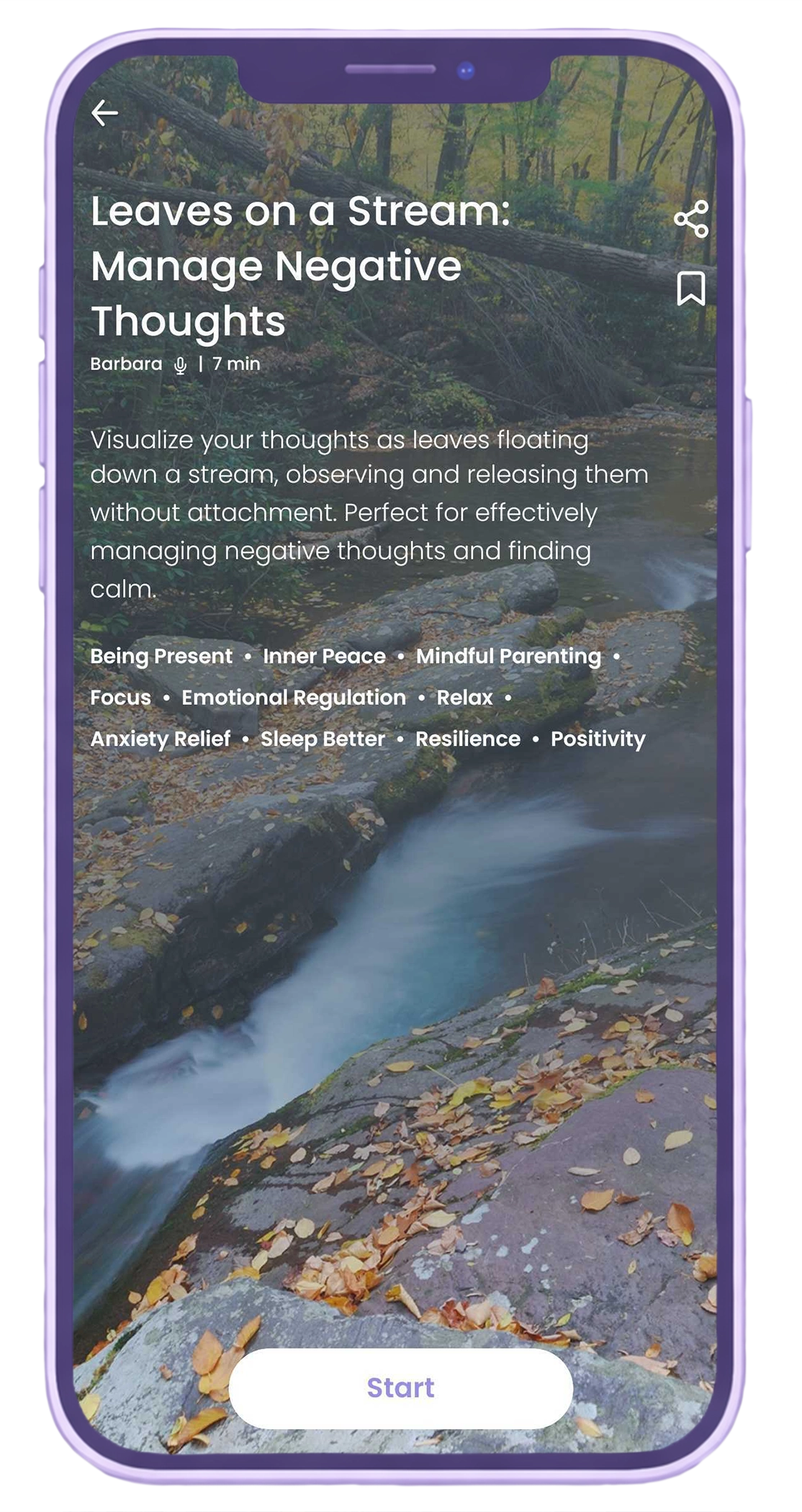
Bubble Thoughts (5 min, Barbara). Not in bed — sit upright for this one. It's harder to do lying down when your brain is already running.

When you can't sleep:

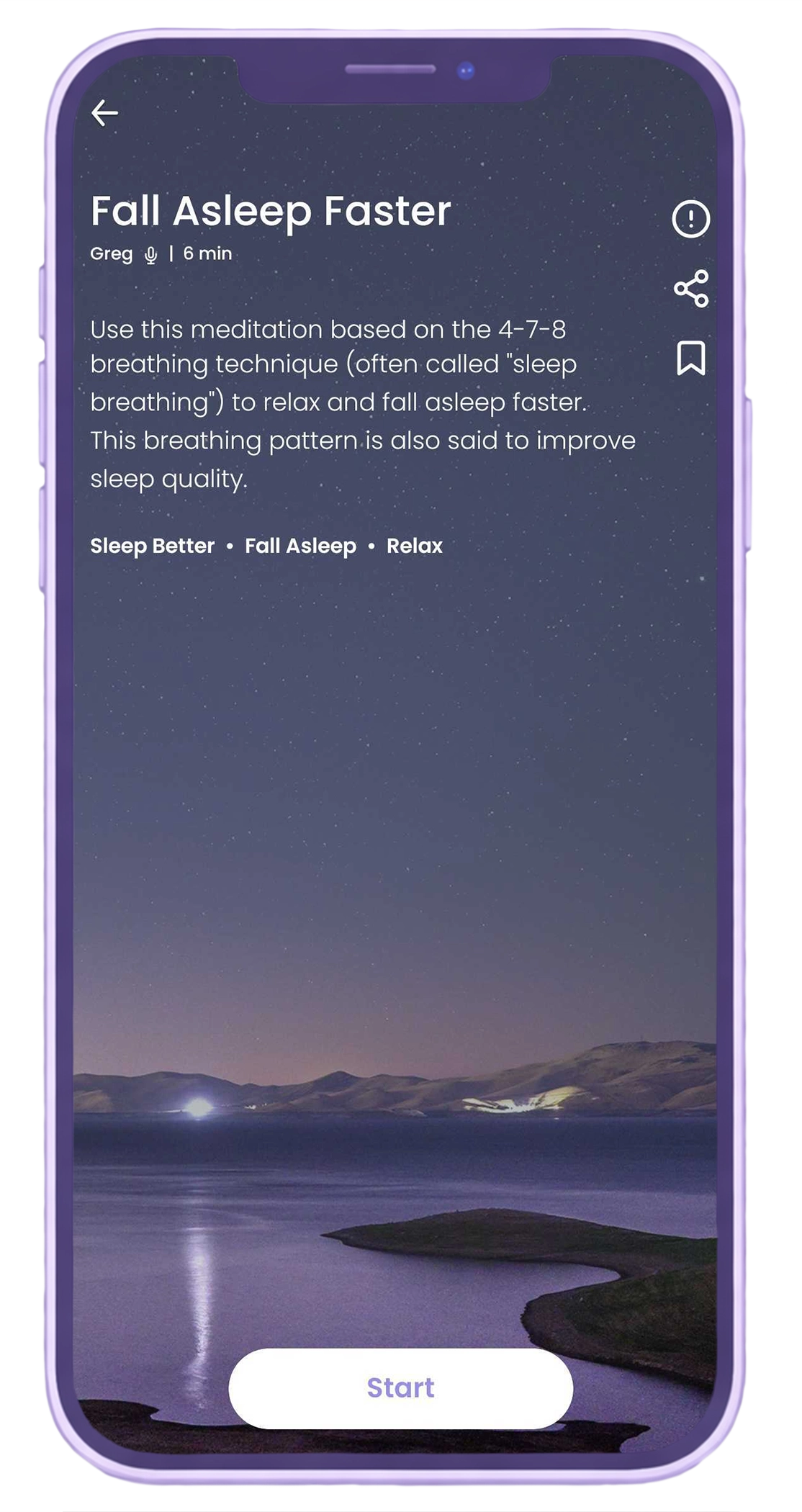
Fall Asleep Faster (5 min, Greg) lying in bed, then — if you're still awake — Get Sleepy (10 min, Tony). Set a sleep sound (Fan or Rain) to run through the night.

When you're anxious about something social:

Morning Calm (4:31 min, Barbara) in the morning before the situation. Or Manage Strong Emotions: The RAIN Technique (6 min, Barbara) when the feeling is already there.

When everything feels like too much:

From Monkey Mind to Inner Peace (5 min, Barbara). No prior experience required. The instructions are inside the session.

Developed with Diana Rodrigues — Yoga, Meditation & Breathwork Specialist

BSc Communication Sciences · 1,500+ hours formal training in yoga, breathwork & meditation · Physiotherapy assistant background · BSc Psychology (2026)

View full profile →

FAQ

I've never meditated. Is Begin for me?

Yes — and you don't need to have meditated before to use it. The most effective starting point for beginners is Box Breathing Relaxation (4 min, Barbara). It doesn't require any specific mindset, position, or prior knowledge. Just follow the visual guide and breathe. Most people feel something shift within the first two minutes.

Will this actually help with exam stress?

Research suggests yes — controlled breathing can help shift the body toward a calmer physiological state, with effects on heart rate, autonomic markers, and self-reported anxiety. Box Breathing (4 min) before an exam is a short, evidence-informed practice that many people find useful. Individual responses vary, but it requires very little time and no prior experience.

I try to meditate and my mind just wanders constantly. Is that normal?

It's not just normal — it's the practice. Every time you notice your mind has wandered and bring it back, you've done one repetition of the attention-training exercise. The mind wandering is not a sign of failure; it's what the brain does. The sessions in Begin — especially Deep Focus: Improve Concentration and Reset Your Focus — are designed specifically around this: the wandering is expected, the return is the skill.

Can Begin help if I have anxiety or depression?

Begin is not a clinical tool and is not a replacement for therapy or medical treatment. That said, the mindfulness and breathing techniques in Begin have strong evidence bases for reducing subclinical anxiety and low mood. If you're experiencing significant anxiety or depression, please speak to a doctor or mental health professional — Begin can be a useful complement to that support, not a substitute.

How long until I notice a difference?

Many people notice something within their first session — a sense of calm or slightly more settled attention. Longer-term changes (a quieter default state, fewer intrusive thoughts, falling asleep more easily, better concentration) tend to become more noticeable with regular practice over 2–4 weeks. Research suggests consistency matters more than duration: short daily sessions are generally more effective than occasional longer ones.

Does Begin work offline?

Yes. Once you've downloaded Begin and your selected sessions, everything works offline. This makes it practical for using before an exam when you don't want to rely on a data connection, on public transport, or anywhere else without reliable signal.

Sources

  1. Zoogman S et al. (2015). Mindfulness Interventions with Youth: A Meta-Analysis. Mindfulness.
  2. Mrazek MD et al. (2013). Mindfulness Training Improves Working Memory Capacity and GRE Performance. Psychological Science.
  3. Ma X et al. (2017). The Effect of Diaphragmatic Breathing on Attention, Negative Affect and Stress in Healthy Adults. Frontiers in Psychology.
  4. Creswell JD. (2017). Mindfulness Interventions. Annual Review of Psychology.
  5. Wheaton AG et al. (2018). Short Sleep Duration Among Middle School and High School Students. MMWR Morbidity and Mortality Weekly Report.

Try Begin free. Box Breathing takes 4 minutes.

Open Begin. Go to Breathing → Guided. Tap Box Breathing Relaxation. Do it once and see how you feel. That's all we ask.

Start Free Trial